Acura = Aero = Alfa-Romeo = Alpina = Artega = Ascari = Aston-Martin = Audi = BMW = Bentley = Brabus = Bugatti = Buick = Cadillac = Caparo = Chevrolet = Chrysler = Citroen = Covini = Dacia = Daewoo = Daihatsu = Daimler = Devon = Dodge = Donkervoort = Farbio = Ferrari = Fiat = Fisker = Ford = GM = GMC = Gumpert = Holden = Honda = Hummer = Hyundai = Infiniti = Italdesign = Jaguar = Jeep = KTM = Kia = Koenigsegg = Lamborghini = Lancia = Land Rover = Leblanc = Lexus = Lincoln = Lobini = Lotus = MG = Mansory = Maserati = Maybach = Mazda = Mazel = McLaren = Mercedes-Benz = Mercury = Mindset = Mini = Mitsubishi = Morgan = Nismo = Nissan = Noble = ORCA = Oldsmobile = Opel = PGO = Pagani = Peugeot = Plymouth = Pontiac = Porsche = Renault = Rolls-Royce = Rover = Saab = Saturn = Scion = Skoda = Smart = Spyker = SsangYong = Startech = Stola = Strosek = Suzuki = Torino = Subaru = Think = Toyota = Tramontana = Valmet = Vauxhall = Venturi = Volkswagen = Volvo = Wiesmann = Yes = Zagato = Zenvo.
Showing posts with label Mercedes-Benz. Show all posts

Sunday, October 16, 2011

Mercedes B-Class, 2012


Mercedes B-Class, 2012

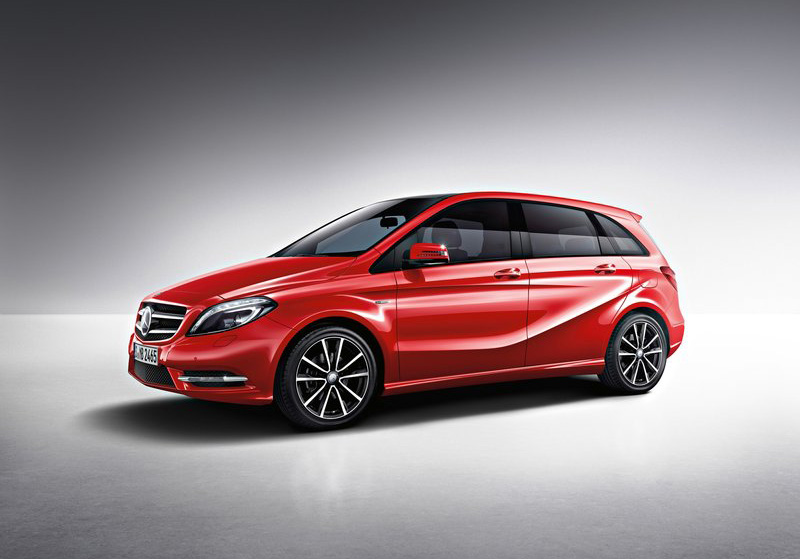
The new Mercedes-Benz B-Class is a winner on all fronts. The vehicle's lower height and more upright seat position provide for a first impression that hints at the compact sports tourer's dynamic credentials.
The world premiere of the new B-Class (length/width/height: 4359/1786/1557 millimetres) took place at the 2011 Frankfurt International Motor Show. It will be making its way to European dealers in November 2011.

The exterior design: perfect space in a most attractive guise
The new B-Class is a typical Mercedes sports tourer, offering plenty of space combined with impressive dynamic performance as a hatchback saloon. The characteristic lines of the exterior design indicate both of these attributes: front and rear sport a width-emphasizing design, with a wide, prominent grille and headlamps extending along the sides at the front while the rear end features a wide rear window, two-piece tail lights with horizontally offset meander and a large tailgate with low loading sill.

Outstanding aerodynamics: astounding cd value despite station wagon rear end
An outstanding drag coefficient of cd = 0.26 places the new Mercedes-Benz B-Class at the forefront of its market segment. Apart from the aerodynamic exterior design, numerous optimisation measures on points of detail such as the air flow around the front wheels, the underbody design and the cooling air flow are also crucial contributory factors to this excellent aerodynamic performance. Patents are pending for innovative details such as the serrated wheel arch spoiler. With the optional ECO Technology package which will be available in due course, the Mercedes-Benz B-Class is even on a par with the world-class aerodynamic credentials of the E-Class Coupé, attaining a drag coefficient of cd = 0.24 which is nothing short of sensational for a vehicle with a station wagon rear end.

New concept: lower overall height but more space inside
The new vehicle concept underscores the dynamic aspirations of the new Mercedes-Benz B-Class. The most striking aspect is the reduced height: at 1557 millimetres, the new model crouches almost five centimetres lower on the road than its predecessor. The seat height in relation to the road has also been reduced (minus 86 mm) in order to facilitate boarding, while maintaining a clear overview of the vehicle's contours.

The Mercedes-Benz B-Class is optionally available with the so-called EASY-VARIO-PLUS system. This enables simple reorganisation of the interior so as to enable the transportation of bulky items. Features of the EASY-VARIO-PLUS system include fore/aft adjustment of the rear seats by up to 140 millimetres (thereby increasing the luggage compartment volume from 488 to 666 litres) and a front passenger seat whose backrest can be folded forward onto the seat cushion.

The interior design: superior quality in a new dimension
High-quality materials and finely structured surfaces, stylish details, precision workmanship and a new spaciousness - the interior of the B-Class defines a whole new benchmark in the compact segment.

Many features have been the reserve of higher classes of vehicle to date and embody Mercedes-Benz's special definition of quality and aesthetics. The dashboard is optionally available in ARTICO man-made leather finish and features stitching, for example. Four equipment packages (Chrome, Sports, Exclusive and Night package) enable individualisation according to personal tastes.

In the interior, the large, three-dimensional trim covering the entire dashboard first strikes the eye. It is available in four variants, covering a broad spectrum from modern through sporty to classic. Common to all versions is a high-class appeal combining an attractive look and feel with easy care and durability.

The three large round vents in the middle and their uniquely designed cruciform nozzles add a sporty attribute to the interior's emotional design idiom. The display, which is available in two sizes (5.8- and 7-inch) appears to hover over the vents. With its stylish design - the trim frame with galvanised finish contrasting with the piano black of the front panel - and slender lines, the colour display (TFT) is a highly attractive feature in the cockpit.

The 3-spoke steering wheel, which always incorporates a silver chrome insert in the middle spoke, the instrument cluster with four analogue round dials and suspended pointers in 6 o'clock position and the seats with contrasting stitching underscore the sporty character.

The drive: designed for maximum efficiency
The new Mercedes-Benz B-Class features new petrol and diesel engines as well as new manual and automatic transmissions. All transmissions and engines have been developed in-house, with production taking place at the plants in Stuttgart-Untertürkheim and -Hedelfingen, Rastatt/Baden, Gaggenau/Baden and Kölleda/Thuringia. The simultaneous development process enabled perfect coordination of engines and transmissions, e.g. with regard to implementation of the ECO start/stop function which features as standard on all B-Class models.

Common features of the new drive systems are the use of state-of-the-art technologies for maximum efficiency, very smooth running, high tractive power right from low revs, sustainability in terms of impending emissions standards and low weight. For the purposes of transverse installation the engines, all of which are turbocharged, and the two transmissions are very compactly designed, providing the Mercedes-Benz B-Class with an exemplary small turning circle for a front-wheel drive vehicle of eleven metres. The engine and transmission suspension disposes of a four-point mounting system comprising engine mount, transmission mount and two self-aligning supports. The suspension system has been designed specifically to meet the requirements of the high-torque engines with regard to minimum noise levels. The hydraulic damping integrated in the transmission mount is a key contributory factor to the exceptionally high ride comfort.

The new four-cylinder petrol engines (internal designation M270) mark the launch of a completely new engine series. The combustion process is based on the third-generation Mercedes-Benz direct injection system which was introduced last year with the BlueDIRECT V6 and V8 engines. Its use in the B-Class marks this technology's debut in the compact segment. The new four-cylinder engines have been designed for both transverse and longitudinal installation. In the new B-Class they are initially available with a displacement of 1.6 litres, as the B 180 rated at 90 kW (122 hp) and the B 200 with an output of 115 kW (156 hp). Their maximum torque of 200 and 250 Nm respectively is available from an engine speed of 1250 rpm.

The new four-cylinder diesel engine is a further development of the OM651 deployed in the C- to the S-Class, a common rail direct-injection engine of the third generation. With its displacement scaled down to 1.8 litres and numerous optimised points of detail, this is the first time that the compression-ignition engine has been mounted transversely in a Mercedes-Benz car. The B 180 CDI generates 80 kW (109 hp) of power, while the B 200 CDI has an output of 100 kW (136 hp). The maximum torque stands at 250 Nm from 1400 rpm for the 80 kW variant and 300 Nm from 1600 rpm for the 100 kW variant.

Mercedes-Benz premiere is the new 7G-DCT dual clutch transmission in the Mercedes-Benz B-Class. This transmission is extremely compact, extremely variable with regard to adaptation of the engine speed thanks to seven gears, features an electric oil pump for start/stop capability, shifts gear without any interruptions in tractive power and combines the comfort of an automatic with the efficiency of a manual transmission.

The new 6-speed manual transmission designed along similarly compact lines as a three-shaft transmission is a close relative of the DCT. Extremely easy gear shifting, low shift forces, low internal friction and a low weight are among its most important characteristics.

The chassis and suspension: refined sportiness now for the sports tourer
"Fascinatingly agile" is the assessment of all test drivers who have put the new B-Class through its paces to date. Three factors are instrumental to the substantially enhanced dynamic performance in comparison to its predecessor, which does not come at the cost of any compromises on comfort: the lowered centre of gravity, the new four-link rear axle and the upgraded ESP® Electronic Stability Programme. A sports suspension is optionally available for further enhanced agility. The centre of gravity has been lowered by a further 20 mm and the suspension additionally features sports dampers with amplitude-selective damping and a Direct-Steer system to emphasize the car's sporty character.

Steering: mechanical with electric assistance

The electromechanical steering of the B-Class has been redesigned. The electric motor of the servo assistance system is now located directly on the steering gear as a dual pinion EPS system, thereby optimising the package as a whole. A Direct-Steer system is available in combination with the sports package. The steering ratio becomes noticeably more direct at greater steering angles, enhancing the vehicle's handling and agility substantially.

New assistance and braking system reduces the risk of rear-end collisions

As a world first in the compact segment, the Mercedes-Benz B-Class features a radar-based collision warning system with adaptive Brake Assist as standard, which lowers the risk of rear-end collisions. The COLLISION PREVENTION ASSIST system outputs a visual and acoustic warning to alert a possibly distracted driver to identified obstacles, and prepares Brake Assist for the most precise possible braking response. This is initiated as soon as the driver emphatically operates the brake pedal.

The democratisation of safety also encompasses an array of other assistance systems which have been adopted into the B-Class from the larger model series:
  •     Adaptive Headlamp Assist
  •     Blind Spot Assist and Lane Keeping Assist
  •     ATTENTION ASSIST (standard)
  •     Speed Limit Assist (speed limit sign recognition)
  •     Active Parking Assist
  •     Brake HOLD function (standard with 7G-DCT)
  •     Hill Hold function
  •     LINGUATRONIC
  •     Reversing camera
  •     DISTRONIC PLUS

Premiere in the compact class: PRE-SAFE® available for the first time
The PRE-SAFE®preventive occupant protection system which features in the B-Class is available for the first time in this vehicle category. This represents a further step in the ongoing democratisation of this innovation, which was premiered in the S-Class in 2002. Core features of PRE-SAFE®are reversible belt tensioning, the closing of side windows and sliding sunroof in case of critical lateral dynamics and adjustment of the fully electric front passenger seat with memory function to an ideal position for maximum effectiveness of the restraint systems. PRE-SAFE®is always activated in response to critical longitudinal and lateral dynamics and may also be triggered upon intervention by certain assistance functions.

COMAND Online multimedia system with internet access
Internet access, the convenient LINGUATRONIC voice control system, two navigation solutions tailored to different budgets, connection for mobile audio devices and an intuitive operating concept - the information and communication systems in the B-Class offers excellent user-friendliness and a superior level of functionality which has been the reserve of higher categories of vehicle to date. It is the new multimedia generation from Mercedes-Benz which delivers these standards. The operating concept featuring the turn/push control in front of the armrest and the control knob on the head unit is also familiar from other Mercedes model series.

The COMAND Online multimedia system offers internet access. Customers can either surf the web as they wish while the car is stationary or call up a Mercedes-Benz app whose particularly fast page loading and simple operation make it suitable for use while driving. Integrated apps include Google™ Local Search and Weather, and the facility for downloading a route which has previously been configured on a PC using Google Maps and transmitted to the car.

Set for the future: modular "Energy Space" concept
The modular "Energy Space" concept means that the new Mercedes-Benz B-Class is already designed to accommodate versions with an alternative drive: appropriate interfaces in the body shell enable the main floor panel to be modified and a step to be produced for the versions with alternative drive. An underfloor compartment covering part of the area under the rear bench seat offers space for alternative energy accumulators.

Sunday, September 25, 2011

Mercedes-Benz F125 Concept, 2011


Mercedes-Benz F125 Concept, 2011

As a highlight marking 125 years of the automobile, Mercedes-Benz is presenting a visionary outlook on future technical developments in the luxury segment. The Mercedes-Benz F125! research vehicle anticipates future trends and prepares the way for implementation of an innovative premium concept for large, luxurious automobiles.

In the F125! Mercedes-Benz rigorously follows its vision of emission-free driving with hydrogen power, underlining the potential of H2 as an energy source for the future. While previous Mercedes-Benz research vehicles have "looked ahead" by roughly one vehicle generation - seven to eight years - the F125! as the latest technological visionary goes a whole step further, by more than two generations to the year 2025 and beyond.

The Mercedes-Benz F125! demonstrates how completely emission-free, individual mobility might be realised in the luxury segment in the future. The researchers and developers at Mercedes-Benz have incorporated already well-proven concepts and technologies which are not yet available today, but for which basic research has shown great future promise, and therefore a realistic chance of implementation in future series-production cars.

The decisive innovations:
  •     A logical further development of the fuel cell drive system in combination with plug-in technology
  •     Revolutionary tank technology: the structure integrated hydrogen composite storage unit.
  •     Lighter and more powerful batteries, in this case based on lithium-sulphur technology, which Mercedes-Benz is examining in parallel with further development of the current lithium-ion battery and research into lithium-air technology.
The Mercedes-Benz F125! was created as an innovative four-seater luxury saloon with a powerful, emission-free electric drive system based on the fuel cell technology developed to series production maturity by Mercedes-Benz. This study combines pioneering and highly efficient storage, drive and bodyshell technologies with unique control and display concepts. The research vehicle also presents itself with an expressive design which transfers the classic Mercedes design idiom into the future.Highlights of the F125!:

    Completely emission-free mobility with a range of up to 1000 kilometres, full day-to-day suitability, superior performance and first-class comfort.
    A bodyshell of innovative, lightweight hybrid construction with a high proportion of fibre-reinforced plastics and an intelligent mix of carbon-fibre, aluminium and high-strength steels, which allows a significant weight reduction while offering a further considerable improvement in safety. A high-strength construction with crash-responsive protective systems within the doors allows the omission of B-pillars, as well as the use of wide gull-wing doors which allow convenient access to the four seats. In this way the Mercedes-Benz safety philosophy and in particular the decisive principle of the rigid passenger cell developed by Béla Barényi in 1952 are being concertedly taken forward for the future of individual mobility.
    A high-voltage lithium-sulphur battery with a specific energy density of 350 Wh per kg at cell level, which allows considerably higher recuperation rates in combination with the e4MATIC all-wheel drive.
    A control and display concept based on touch, speech and hand-gestures makes the Mercedes-Benz F125! a true "companion" with whom the driver is able to interact flexibly and effortlessly. The gull-wing doors of light-weight CRP construction can also be opened and closed by hand-gestures.
    Highly attractive displays using 3D and projector-beam technology to open up new visual possibilities.
    Next-generation, substantially networked telematics allow internet-based voice control, integration into social media and extensive remote control of vehicle settings and entertainment functions.
    Innovative assistance systems for lasting driver stress relief, e.g. Advanced Driving Assist for semi-autonomous driving.
    Trailblazing exterior and interior design based on a completely new saloon architecture.

Revolutionary: structural integrated hydrogen composite storage unit
To store the hydrogen as the fuel of the future, Mercedes engineers adapted a technology which is still the object of basic research. This opens up completely new perspectives with respect to the vehicle architecture and operating range. "The structural integrated hydrogen composite unit of the F125! represents a real technological revolution, as it allows the hydrogen tank to be fully integrated into the bodyshell structure for the first time. In the future, vehicles with emission-free fuel cell drive systems could achieve the operating ranges of current diesel models with no loss of interior space," says Prof. Dr. Thomas Weber. Based on the current level of know-how, Mercedes specialists consider it possible that they may develop this technology to series production level from 2025.

The tank integrated into the floor assembly has a capacity of around 7.5 kg of hydrogen. Compared to the high-pressure tanks in use today, the H2 tank potentially requires less installation space. This is because to withstand a pressure of up to 700 bar, current tanks need to be cylindrical in shape, and owing to this round cross-section there are inevitably "cavities" between tanks installed next to or above each other. In contrast, tanks that can be filled at a pressure of 30 bar or less can be better integrated into the bodyshell. At the same time they are able to act as "structural" components.

Lithium-sulphur battery: compact and powerful
A highly advanced, very powerful lithium-sulphur battery is envisaged for the Mercedes-Benz F125!. It has a storage capacity of 10 kWh and is installed behind the rear seats. Combining the fuel cell drive system with the innovative lithium-sulphur battery makes a total operating range of up to 1000 km possible, of which up to 50 km can be under battery-electric power alone. It can be inductively charged at "intelligent" charging stations, and the convenient charging process can be monitored by smartphone. When designing the F125!, the developers worked on the assumption that by the time of its introduction into series production, this battery type will be capable of energy densities up to 350 Wh per kg. This would represent roughly a doubling of current performance. The real potentials of this technology are however the subject of basic research, and are still difficult to assess at present.

Further development of the fuel cell as an energy source
At the heart of the drive system lies a particularly powerful further development of the Mercedes-Benz fuel cell stack which has demonstrated its efficiency and day-to-day suitability e.g. in the successful B-Class F-CELL World Drive in 2011.

On 29 January 2011, marking the 125th birthday of the automobile, Mercedes-Benz commenced the first circumnavigation of the globe with fuel cell powered electric cars in Stuttgart - covering more than 30,000 kilometres on four continents and through 14 countries. The three fuel cell powered B-Class cars and their backup vehicles returned safely to Stuttgart 125 days later.

The stack in the Mercedes-Benz F125!, which is further improved with respect to performance, consumption and practical suitability, provides the power for four powerful electric motors installed near the wheels, which ensure sporty, superior performance figures. All in all the modular e4MATIC system, which also uses improved drive components from the SLS AMG E-CELL, generates a continuous output of 170 kW (231 hp) and a peak output of 230 kW (313 hp).
This accelerates the F125! to 100 km/h in 4.9 seconds, with a top speed of 220 km/h. Nonetheless, NEDC fuel consumption is only 0.79 kilograms of hydrogen per 100 kilometres (= 2.7 litres diesel equivalent).

In Natural Handling, operation is substantially by natural speech supplemented with touch and intuitive hand-gestures. In the interests of maximum driver-fitness and operating safety, the Mercedes-Benz F125! becomes the perfect, always alert companion for its driver and passengers. The possibilities go well beyond those of current systems. The driver can e.g. request news items that are tailored to his personal needs, and make specific, contextual enquiries, without removing his hands from the wheel. The COMAND of tomorrow also becomes proactive.

The driver will be able to start with the traffic report or retrieve personal messages before the selected music programme begins. The weather report will then automatically come on before the journey ends, for example. Thanks to the mood-based configuration function "Moods", such individual adjustments will be completed in a matter of seconds in future. The F125! also opens up completely new dimensions when it comes to external commu-nication and the use of social networks. With the help of the Social Community Assistant, the driver alone can decide who is allowed to "disturb" him, or who receives information.

Sensory Perfection in the Mercedes-Benz F125! means high-end sound and high-resolution screens with brilliant, individual displays. If required, the autostereoscopic 3D display for spatial representation of the instrument cluster is able to show relevant information in clustered form. The 3D image adapts natural visual habits, allows a better overview and thus relieves the driver of stress. The head unit in the upper section of the centre console uses projector-beam technology, and is controlled via a touchpad with 3D fingertracking located within easy reach of the driver. In addition to the head unit, the integrated selection bar enables the instrument cluster and rear-view display to be selected. Activated in this way, these displays can also be centrally operated. A further, retractable 17-inch display is installed on the front passenger side, and this is fully controlled by hand gestures. In this way a rear passenger can select his personal film programme with no physical contact.

A high-resolution wide-image display allows the entire traffic situation behind the vehicle to be conveniently monitored, and makes exterior mirrors unnecessary. The image is adapted to human perceptive powers at all times, and once again provides a much clearer overview with more rapid and intuitive registration of the relevant traffic situation.

The vehicle and its multimedia system, as well as all applications and contents, can be completely remote-controlled using the Remote Convenience functions. This e.g. means that via the vehicle's specific homepage, authorised individuals have access at all times to information such as the fuel level, next scheduled service or fuel consumption. Just as easily, a home PC or of course a smartphone can be used for remote configuration of the onboard navigation or entertainment system, and to select individual interior temperature settings for each seat.

Mobility of the future - Utopias shaping our tomorrow
It was visionaries and dreamers who prepared the way for "automobility". The first tentative steps were taken at the end of the 19th Century - in a techno-logical environment where the steam engine dominated the world of power generation. The steam locomotive added motion to this machine, and tracks were laid everywhere.

The idea of fitting coach-like vehicles with compact, fast-running internal combustion engines to make individual, easy and comfortable mobility possible beyond the railway tracks was seen as "utopian" at the time - i.e. synonymous with "science fiction" or "fantasy".
Visionary engineers and utopians such as Carl Benz, Gottlieb Daimler, Wilhelm Maybach or Rudolf Diesel refused to be daunted, however. With the F125! Mercedes-Benz is once again demonstrating this pioneering spirit.

F125! - a specific outlook on the vision of emission-free driving
With the new Mercedes-Benz research vehicle, the vision of emission-free driving with large, luxurious automobiles takes on a concrete form. The F125! shows that the mobility of the future is emission-free and sustainable, comfortable and visually very appealing. It embodies technical and design innovation, and shows the way towards a society able to cope without fossil fuels.

Mercedes F800 Style Concept, 2010


Mercedes F800 Style Concept, 2010

Mercedes-Benz F800 Style Concept is showing the future of premium automobiles from a new perspective, as the five-seat premium sedan combines highly efficient drive technologies with unparalleled safety and convenience features and an emotive design idiom, which interprets current Mercedes-Benz styling in line with the brand's hallmark attribute of refined performance. The F800 Style has a spacious interior full of intelligent seating, operating, and display concepts. Another unique feature of the large sedan is an all-new multi drive platform, which accommodates electric drives with fuel cells (enabling ranges of almost 375 miles) as well as the use of Plug-in Hybrids that can drive for up to 18 miles solely on electricity. Both variants of the Mercedes-Benz F800 Style Concept therefore make locally emission-free mobility possible at the level of a premium-class automobile, while at the same time being fully suited for everyday driving and providing a dynamic driving experience.

Mercedes F800 Style Concept with further innovations for more comfort and safety
In addition to a multi-drive platform that is unparalleled for large sedans and the combination of different alternative drive technologies, the Mercedes-Benz F800 Style Concept features many other technological innovations, such as a new multi-function display concept and a human-machine interface (HMI) with a cam touchpad. The display shows many additional functions not typically found in conventional instrument clusters. The Mercedes-Benz F800 Style's display concept focuses for the first time primarily on electric driving functions.

HMI with cam (camera) touchpad for intuitive and precise operation
The new cam touchpad HMI is an intelligent expansion of the COMAND system. For many years now, Mercedes-Benz has been forging ahead with the development of innovative operating and display systems. A particularly user-friendly innovation is being presented in the Mercedes-Benz F800 Style Concept. The HMI unit here consists of a touchpad on the center console and a camera that records video images of the user's hand as it works the pad. The live image of the hand is presented in transparent form in the central display above the console. The user sees the contours of his or her fingers glide across the image without covering anything, thus ensuring that all of the functions of the currently used menu remain visible so that they can be easily operated by applying slight pressure to the touchpad. Pressing the display with one's fingers generates a feeling similar to that of touching laptop keys so that users know when they are carrying out specific actions.

The cam touchpad HMI unit recognizes finger movements on the pad surface such as wiping, pushing, turning, and zooming, thus enabling intuitive regulation of the climate control system, telephone, stereo and navigation systems, and Internet access. The unit enhances active safety as well, because it is extremely easy and convenient to use and therefore does not distract the driver as much from the actual task of driving. And unlike conventional touchscreens, the HMI cam touchpad does not get smudged with fingerprints.

Conventional touchpad units generally depict hand or finger positions only by a small point in the display. Their lack of precision makes it very risky to enter information while driving, because doing so diverts the motorist's attention too much from the road. By contrast, the HMI with cam touchpad can be easily and safely operated even while driving. Test subjects have confirmed that the HMI with cam touchpad is extremely easy and safe to use, particularly as a result of the transparent depiction of the hand.

Range on Map: Graphic range depiction during electric operation
Another very user-friendly innovation created by the Mercedes engineers is the "Range on Map" function, which shows the remaining possible travel radius during electric vehicle operation as a 360° depiction on a map. Should municipalities only permit purely electric automobile traffic in the future, the driver can determine whether the electric range of his or her vehicle is sufficient for the journey into and out of the urban area by means of the Range on Map function. The system provides this function by combining information on the current battery charge level with data from the navigation system.

In the new operating and display concept, Mercedes-Benz has created a solution that provides an unparalleled amount of information in a system of exemplary clarity. The engineers have thus achieved the goal of successfully developing a comprehensive yet easy-to-operate information and control system for future automobiles equipped with electric or partially electric drive systems. A further-developed version of the system can also display recharging stations.

Mirror display is easy on the eyes
The mirror display of the innovative cam touchpad HMI eliminates the differences between close proximity visibility and visibility over longer distances, thus contributing to the driver's physiological safety in a manner typical of Mercedes. The system displays driving and vehicle information via a mirror in the instrument cluster so that they appear to be farther away. The distance the eye looks into is thus extended, which means less switching between near and far focus — and therefore less fatigue — for the eyes.

New DISTRONIC PLUS Traffic Jam Assistant further reduces the stress of driving
Back in 2006, Mercedes-Benz introduced DISTRONIC PLUS, the world's first proximity and speed control system that operates even when the car is standing still. The system substantially reduces the stress for drivers in dense traffic, as it regulates the distance from the vehicle in front even at very low speeds all the way down to a standstill. With its new DISTRONIC PLUS Traffic Jam Assistant feature in the F800 Style, Mercedes-Benz has also become the world's first automaker to implement a system that is also capable of automatically following the vehicle in front of it into curves. The system recognizes the difference between driving along curving roads and turning, which means it does not "blindly" follow the vehicle up in front — for example, when it changes lanes in order to exit the highway.

The result is that at speeds of up to about 25 mph, the Traffic Jam Assistant function takes care of both longitudinal and transverse movements so that drivers do not have to steer themselves. The driver can just sit back and relax — with hands on the steering wheel. When the 25 mph mark is exceeded, the steering torque that keeps the vehicle in its lane is gradually reduced to a point at which the Traffic Jam Assistant smoothly disengages. Drivers can, of course, override the system at any time. Sensitive sensors notice active steering movements, thus automatically deactivating the system's lateral control function.

PRE-SAFE 360° improves safety in rear-end collisions
While the Traffic Jam Assistant heightens comfort and active safety, the innovative protective system known as PRE-SAFE 360° further improves passive safety. PRE-SAFE 360° is based on the proactive occupant protection system PRE SAFE® developed by Mercedes-Benz. Unlike the previous system, PRE-SAFE 360° also monitors the area behind the vehicle. As a result, the system engages the brakes around 600 milliseconds before an anticipated rear-end collision occurs. The key advantage of this system is that braking a stationary vehicle helps prevent secondary accidents such as those that occur when the car is pushed uncontrolled into an intersection or a pedestrian crossing. It goes without saying that PRE-SAFE 360° also allows the driver to take control at any time. For example, the brake is immediately released if the driver hits the gas pedal, should they recognize that there is sufficient space in front of their vehicle to avoid the rear impact.

Rear pivot-and-slide doors ensure maximum entry comfort
A particularly customer-friendly innovation of the Mercedes-Benz F800 Style Concept is its rear doors. Whereas the front doors are attached to the A-pillar in a conventional manner and open wide toward the front, the rear doors slide backward when opened, as they are suspended from an interior swivel arm. Because the doors slide back close to the vehicle body, occupants find it much easier to get into and out of the automobile in tight parking spaces.

The Mercedes F800 Style Concept also has no B-pillar, making the entire space between the A and C-pillars completely accessible when the doors are opened. Despite the lack of a B-pillar, the Mercedes-Benz F800 Style Concept boasts a bodyshell that is both extremely robust and lightweight, and that meets the stringent demands for crash safety that are a hallmark of the Mercedes brand.

Reinterpretation of the typical Mercedes-Benz design idiom
The Mercedes-Benz F800 Style Concept is both a technology platform and a showcar. This research vehicle was created through close cooperation between technical research and advanced engineering departments and the advanced design studios in Sindelfingen, Germany and Como, Italy. Its exterior appearance is marked by a long wheelbase, short body overhangs, and a sensually flowing roof line.

Front end with distinctive LED headlights
The vehicle's front end features a variation of the radiator grille with the centrally placed star that is typical of Mercedes sports cars. The curved radiator grille bars softly flow around the tube holding the Mercedes-Benz brand star. Along with the wide radiator grille and the generously curved air intake openings, the model's unique bright LED headlights emphasize the dynamic nature of the research vehicle. The headlights are divided into individual segments for daytime running lights, turn signal indicators, and primary headlights. The Mercedes-Benz F800 Style Concept's taillights are also equipped with state-of-the-art LED units that enable an exciting interplay of indirect illumination and direct beams. The result is an attractive, unmistakable, and memorable visual effect.

Wood and light create a cozy interior
Luxurious wood surfaces and lots of light ensure a high level of comfort in the interior of the Mercedes F800 Style Concept. Occupants will immediately notice the modern sense of lightness, and functional elements like the driver area and the door armrests seem to float in space like sculptures. The innovative lightweight-construction seats in the Mercedes-Benz F800 Style Concept consist of a magnesium shell and a carbon fiber laminate shell backed with a fine yet resistant netting. The seat shell also features genuine wood veneer. For the veneer process, Mercedes-Benz engineers used a 3D surface coating procedure designed especially for the veneering of three-dimensional surfaces. This same procedure was used to create the wood finish in the center console, on the doors, and in the driver area. These wood finishing pieces are molded as 3D laminated components and are augmented by an aluminum core, which ensures that the components meet the high crash safety standards that are a hallmark of Mercedes.

Successful transfer from research to series production
Mercedes-Benz has presented 13 research vehicles since the early 1980s. The range of innovative and pioneering automobiles that was unveiled — beginning with Auto 2000 in 1981 and leading up to today's F800 Style — offers proof of the consistency and foresight with which Mercedes-Benz engineers address the core issues of research and technology in order to develop innovative solutions for the future. Many systems that were first used in research vehicles and viewed as revolutionary at the time are now found in Mercedes-Benz production cars, including the DISTRONIC proximity-controlled cruise control, which was first installed in the F 100 in 1991 and made its series production debut in the S-Class in 1998.

The Mercedes-Benz F800 Style Concept is continuing this approach. Like its predecessors, the model features important drive, comfort, and safety system innovations, as well as an avant-garde design, all of which point the way forward for future series- production Mercedes-Benz vehicles that will continue to impressively combine fascination and responsibility.

Saturday, September 24, 2011

Mercedes-Benz E-Class 4Matic, 2010


 Mercedes-Benz E-Class 4Matic, 2010

With snow, sleet, freezing fog, black ice, temperatures hovering around zero and severe frosts, the winter months hold some unpleasant road conditions in store for drivers. Despite these impediments, however, drivers of Mercedes models equipped with the 4MATIC permanent all-wheel-drive system can set off for the daily commute to work or savour the drive to the next winter wonderland with complete peace of mind. This is because the 4MATIC drive concept boasts formidable performance on snow-covered or icy roads. The Mercedes-Benz E-Class 4MATIC in particular stands out for its blend of high traction reserves, excellent directional stability, peerless safety and exceptional comfort levels. Mercedes-Benz is demonstrating the capa-bilities of the Saloon and Estate models by staging a 4MATIC Workshop in extreme winter conditions on the Timmelsjoch high alpine road in Austria.

The drive mechanism's permanently engaged design offers key advantages over other systems that first need to diagnose a lack of grip before activating the 4x4 drive. The 4MATIC on the Mercedes-Benz E-Class will have already made use of this valuable time to start transmitting drive torque via the wheels to the road.

Mercedes-Benz E-Class 4MATIC: stable handling on snow and ice
When pulling away in wintry conditions, the Mercedes-Benz E-Class 4MATIC models are designed to develop maximum traction. To this end, certain road conditions are automatically detected and the interventions of the 4ETS electronic traction control system adjusted so as to achieve the greatest possible acceleration while minimising wheel slip, ensuring optimum directional stability in the process. This strategy also allows the vehicle to pull away under the most adverse conditions, such as when one side of the vehicle is on an icy slope (µ-split) or both wheels on the front or rear axle have limited grip (µ-jump).

On twisting roads covered with snow and ice, vehicle stability is primarily controlled by the ASR acceleration skid control system's regulation of engine torque. The ASR control thresholds are adjusted according to the driving situation based on the vehicle's longitudinal and lateral dynamic readings as continuously measured by the ESP sensor system. If vehicle stability is to be maintained, the longitudinal force when cornering must be controlled by means of engine torque regulation in such a way that there are sufficient reserves of lateral force at all times. In order to comply with this physical correlation, when cornering on road surfaces with a low friction coefficient the control thresholds for engine torque regulation at the wheels on the outside of the bend are reduced considerably so that the tyres can develop sufficient lateral force.

4MATIC: cutting-edge technology breaks new ground
The 4MATIC powertrain in the Mercedes-Benz E-Class is one of the best-performing permanent all-wheel-drive systems on the market. The basic design concept, with the engine installed longitudinally and the integral transmission and transfer case unit, produces a compact, lightweight arrangement that minimises frictional losses, heralding a number of benefits compared to other passenger car systems with a transverse power unit and selectable 4x4. Fuel consumption, for instance, is a mere between 0.2 and 0.6 litres more per hundred kilometres than on a com-parable model with conventional drive, while vibration and acoustic comfort meet the high standards expected of the Mercedes-Benz E-Class.

Mercedes-Benz E-Class synonymous with supreme ride comfort
Mercedes-Benz achieves the standard of ride comfort which all versions of the E-Class are renowned for courtesy of the highly sophisticated DIRECT CONTROL suspension with adaptive shock absorbers, an intelligent body design with excellent rigidity, plus enhanced seats which are also available with massage and climate control functions. The weight-optimised DIRECT CONTROL system, featuring a three-link front suspension and multi-link independent rear suspension, automatically adapts to the changing driving situation by varying the damping forces, resulting in a substantial improvement in ride comfort. The air suspension system - optional for all 4MATIC models and standard on the E 500 4MATIC - is combined with a continuously variable, electronically controlled damping system that processes a series of sensor signals and controls each wheel individually. So, not only do Mercedes customers experience the best in ride comfort, they reap the benefits of excellent handling safety and sporty agility too.

THERMATIC and THERMOTRONIC heat up the passenger compartment of the Mercedes-Benz E-Class extremely efficiently, even after a cold start on winter mornings. This is thanks to a heating output of eleven kilowatts, equivalent to the capacity of the central heating system in a modern family home. On the diesel models, a heat exchanger with six integral PTC heating elements (PTC = Positive Temperature Coefficient) is also activated when the outside temperature falls below a certain level in order to boost the effect of the main heat exchanger with an electrical output of around 1200 watts. The assistance from the PTC heater is necessary due to the high thermal efficiency of today's CDI engines, which is precisely what makes them so economical and means that they dissipate considerably less heat to the coolant under partial load conditions than conventional engines.

Mercedes offers 4MATIC in 52 passenger car models
The Mercedes-Benz all-wheel-drive line-up encompasses 52 passenger car models across nine model series and offers an impressively wide choice: besides the Mercedes-Benz E-Class and the C-Class, which likewise comes in both a saloon and an estate variant, the 4MATIC portfolio is enriched by models from the S-Class, CL luxury coupé and R-Class touring SUV ranges too. There is also the compact GLK as well as the GL-Class and M-Class off-roaders. Still going strong after 30 years in production, the G-Class truly comes into its own off the beaten track and continues to rank as one of the best cross-country vehicles in the world.

All-wheel drive development expertise since 1903
Ther's a reason why Mercedes engineers are so skilled in the development of groundbreaking all-wheel-drive concepts. The history of all-wheel drive at Mercedes-Benz dates all the way back to 1903. Since then, the accepted maxim has been that all-wheel drive is the best technology for making quicker and safer progress under the most adverse conditions. Over the course of the years it has been successfully employed in a variety of Mercedes-Benz models. Some models, such as the G-Class and the Unimog, have attained legendary status all over the world. But all-wheel drive has its benefits in everyday operation on asphalt roads too, as demonstrated by the 4MATIC saloons from Mercedes-Benz. The innovative drive concept received its saloon premiere in the W 124 Mercedes-Benz E-Class model series back in 1987. The 4ETS system made its debut aboard the M-Class in 1997. Mercedes-Benz has therefore amassed a wealth of experience with these electronic control systems - more in fact than any other car manufacturer.

Mercedes-Benz E63 AMG, 2010


 Mercedes-Benz E63 AMG, 2010

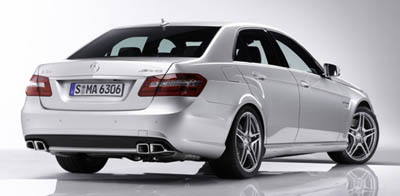
The dynamic sports saloon with day-to-day suitability impresses with outstanding performance, thrilling handling characteristics and a technology transfer from the SL63 AMG high-performance Roadster.

The new Mercedes-Benz E63 AMG distinguishes itself from the regular Mercedes-Benz E-Class models with a completely newly developed AMG RIDE CONTROL sports suspension with electronically controlled damping and a new front axle, and with its autonomous exterior and interior design. At the same time Mercedes-AMG has achieved a reduction in fuel consumption by almost 12 percent for the new Mercedes-Benz E63 AMG, thanks to the concerted use of fuel efficiency measures. With its unique combination of pioneering driver assistance systems, the Mercedes-Benz E63 AMG further consolidates the brand's leading position in the field of automotive safety.

The AMG 6.3-litre V8 engine in the new Mercedes-Benz E63 AMG develops a power output of 525 hp and a torque figure of 630 Nm, matching the outstanding figures for the SL63 AMG. The high-performance Roadster has also donated its AMG SPEEDSHIFT MCT 7-speed sports transmission to the new model. It dispenses with a conventional torque converter and uses a compact, wet start-up clutch. In conjunction with the four individual driving modes, the throttle-blipping and RACE START functions, the resulting, direct connection to the powertrain allows an extremely emotional and highly dynamic driving experience.

The drive unit is unique in this segment, and ensures sporty performance figures: the Mercedes-Benz E63 AMG accelerates from 0-62 mph in just 4.5 seconds, with a top speed of 155 mph (electronically limited). The fast-revving, naturally aspirated engine with a displacement of 6208 cc impresses with its agile responsiveness, muscular power delivery and great flexibility. The newly composed AMG V8 sound is a thrilling accompaniment mile after mile, while the smooth-running engine guarantees typical Mercedes-Benz long-distance comfort. A newly designed water cooling system ensures maximum endurance even under the enormous dynamic stresses of the racetrack.

The Fuel consumption cut by almost 12 percent

Despite 11 hp of additional output versus the preceding model, the fuel consumption of the new Mercedes-Benz E63 AMG has been significantly improved. It now returns 22.4 mpg, 2.6 mpg more than then previous car (NEDC combined consumption, provisional figure), and leads the field among sports saloons developing more than 500 hp. This progress has been made possible by a package of efficiency-enhancing measures. These include on-demand delivery of fuel and generator management with recuperation of braking energy on the overrun, both of which are standard in the new Mercedes-Benz E63 AMG. In-engine friction is also reduced by the AMG-exclusive twin-wire arc spray coating process used on the cylinder walls.

The AMG SPEEDSHIFT MCT 7-speed sports transmission also makes a decisive contribution to fuel economy: a wet start-up clutch running in an oil bath replaces the previous torque converter. This unit responds extremely rapidly, dynamically and without the losses typical of a torque converter transmission thanks to its low rotational inertia. The transmission is equipped with four driving modes: "C" (Controlled Efficiency), "S" (Sport), "S+" (Sport plus) and "M" (Manual), which can be selected using a rotary electronic switch in the AMG DRIVE UNIT. Partial suppression of individual cylinders by interrupting ignition and injection during gearshifts under full load leads to considerably faster shift times. In M mode the AMG SPEEDSHIFT MCT 7-speed sports transmission allows gearshifts to be performed in 100 milliseconds.

In the even more fuel-efficient driving mode Controlled Efficiency, the transmission shifts the gears decidedly smoothly, and the transmission control unit is programmed to perform early upshifts to keep engine speeds as low as possible. At the same time the AMG SPEEDSHIFT MCT 7-speed sports transmission meets the most demanding requirements where driving dynamics are concerned: fast and precise multiple downshifts ensure first-class agility in conjunction with the automatic throttle-blipping and RACE START function: this enables the Mercedes-Benz E63 AMG driver to call on the maximum acceleration potential automatically.

Electronically controlled damping system and a new front axle
Sporty or more comfort-oriented? The driver of the new Mercedes-Benz E63 AMG is not obliged to accept any compromises in this respect. The AMG RIDE CONTROL sports suspension copes equally well with the agile manoeuvres of the racetrack and more comfortable, sedate driving. High performance and typical Mercedes-Benz long-distance comfort go together as an extraordinary synthesis in the Mercedes-Benz E63 AMG. This is made possible by the newly developed AMG RIDE CONTROL sports suspension. While new steel spring struts are used on the front axle, the rear suspension features AMG-specific air springs. The advantage of this solution, which is exclusive to AMG, is that the front spring struts ensure more sensitive responses while the rear air struts with their automatic level control system keep the vehicle at a constant height irrespective of the load.

The new, electronically controlled damping system automatically varies the damping characteristics according to the driving situation, reducing the roll angle of the body. The result is instant adjustment to provide the best possible ride comfort together with the greatest possible agility. In addition the driver is able to choose between the three suspension modes of Comfort, Sport and Sport plus at the touch of a button. The Mercedes-Benz E63 AMG is also equipped with a newly developed, dedicated front axle with a 56 mm wider track, a tubular stabiliser, new control arms, new wheel bearings, new elastokinematics and new wheel location for more negative camber - thereby providing more grip when taking bends at speed. The AMG-specific kinematics also ensure significantly more precision. This is a highly sophisticated axle design whose principle has already proved its worth in the C 63 AMG. The rear axle likewise has more negative camber, optimised elastokinematics and a new subframe mounting for greater stability at the physical limits.

Developed power steering and individual 3-stage ESP
For more direct responsiveness, the speed-sensitive rack-and-pinion steering is also a new development. The steering ratio of 14 : 1 is 22 percent more direct than in the standard production models, while a more rigid steering column plus the reconfigured characteristic mapping of the speed-sensitive servo assistance ensure better steering precision and improved road contact.
The 3-stage ESP familiar from the SL63 AMG and C63 AMG enables individual settings to be selected - with clear benefits in terms of driving pleasure combined with the same, high level of handling safety. The ESP key in the AMG DRIVE UNIT allows the driver to choose between "ESP ON", "ESP SPORT" and "ESP OFF" - with the currently active mode shown in the central display of the AMG instrument cluster. Perfect deceleration even when driving extremely briskly is ensured by the AMG high-performance braking system with 360 mm, internally ventilated and perforated brake discs all-round. Particularly resistant, motorsports-tested composite technology is used at the front axle. Outstanding grip is ensured by the 18-inch AMG light-alloy wheels with a width of nine and 9.5 inches and mixed tyre sizes of 255/40 R 18 at the front and 285/35 R 18 at the rear.

Decidedly dynamic interior and exterior
The decidedly dynamic design of the Mercedes-Benz E63 AMG is fully in keeping with the uncompromisingly sporty technology. The front aspect is characterised by 17 mm wider wings bearing "6.3 AMG" lettering, the new AMG front apron with large air intake apertures and the AMG-specific daytime driving lights using LED technology. In conjunction with the standard Intelligent Light System, the Mercedes-Benz E63 AMG is equipped with tinted main headlamps. The striking visual presence is further enhanced by the AMG side skirts and AMG rear apron with a black diffuser insert. As a hallmark of the brand, the AMG sports exhaust system has two newly designed, chrome-plated twin tailpipes.

The newly designed interior of the Mercedes-Benz E63 AMG is an exciting blend of high-grade materials and functional sportiness. Exclusive features include the dedicated, electrically adjustable AMG sports seats with improved lateral support and the AMG sports steering wheel in a four-spoke design with AMG shift paddles. As a completely new feature exclusive to the Mercedes-Benz E63 AMG, the AMG selector lever has one-touch logic. Directly adjacent to it in the centre console is the AMG DRIVE UNIT, which provides adjustments for the MCT sports transmission, the ESP functions, the suspension set-up and the AMG driving modes. Standard equipment also includes high-grade nappa leather upholstery in three different colours, the AMG instrument cluster with an AMG main menu, door entry sills with AMG lettering and a sports pedal cluster - both in brushed stainless steel.
Even more individuality with tailor-made AMG extras

The Mercedes-Benz E63 AMG can be dynamically enhanced with the Performance Package:
    * Lightweight, forged 19-inch AMG light-alloy wheels with size 255/35 R 19 tyres at the front and 285/30 R 19 at the rear
    * AMG Performance suspension with a stiffer set-up
    * AMG rear axle locking differential with 40 percent locking action
    * AMG spoiler lip on the boot lid
    * AMG Performance steering wheel in a three-spoke design

Optional extras from the AMG PERFORMANCE STUDIO are:
    * Lightweight, forged 19-inch AMG light-alloy wheels with size 255/35 R 19
    * tyres at the front and 285/30 R 19 at the rear
    * AMG rear axle locking differential with 40 percent locking action
    * AMG Exterior Carbon package
    * AMG Performance steering wheel in a three-spoke design
    * AMG carbon-fibre trim in the interior
    * Illuminated AMG door entry sills
    * AMG floor mats

Thursday, September 15, 2011

Mercedes-Benz B-Class F-Cell, 2010


 Mercedes-Benz B-Class F-Cell, 2010

Mercedes-Benz is launching its first series-produced fuel cell car on the road: the new Mercedes-Benz B-Class F-Cell. The environmentally friendly electric car has better a performance similar to than a 2,0-litre petrol car and is fully suited for everyday driving. The zero-emission drive system consumes the equivalent of 3.3 litres of diesel per 100 kilometres in the NEDC (New European Driving Cycle). Production of the Mercedes-Benz B-Class F-Cell will commence in late 2009 with a small lot. The first of around 200 vehicles will be delivered to customers in Europe and the USA at the beginning of 2010.

The new fuel cell vehicle offers everything that people expect from a Mercedes-Benz: High comfort and safety as well as no reduction in interior space and boot capacity. Customers will not have to sacrifice any driving pleasure either, because the electric motor has a peak performance of 100 kW/136 hp and a maximum torque of 290 Nm,  from the first rotation. It ensures that the Mercedes-Benz B-Class F-Cell, whose impressive dynamic handling properties are in some cases far better than those of a two-litre petrol car, gets off to an excellent start. Despite these qualities, the zero-emission fuel cell drive consumes the equivalent of only 3.3 litres of diesel fuel per 100 kilometres (NEDC). Thanks to its great range of about 400 kilometres and short refuelling times of around three minutes, the Mercedes-Benz B-Class F-Cell ensures local zero-emission mobility even for long stretches.

The vehicle's technological heart is the new generation of the compact, high-performance fuel cell system, in which gaseous hydrogen reacts with atmospheric oxygen at 700 bar to generate a current for the electric motor. The fuel cell system of the Mercedes-Benz B-Class F-Cell has a very good cold-start capability even at temperatures as low as minus 25 degrees Celsius. The drive system was completely newly developed versus the F-Cell A-Class presented in 2004, with Mercedes-Benz engineers achieving considerable improvements in output, torque, operating range, reliability, starting characteristics and comfort. The Mercedes-Benz B-Class F-Cell now offers driving pleasure and day-to-day suitability at Mercedes level - without local emissions.

As in hybrids with combustion engines, the fuel-cell car uses a lithium-ion battery with an output of 35 kW and a capacity of 1.4 kWh to boost power and recover braking energy. Lithium-ion technology offers several advantages over conventional batteries, including compact dimensions, high performance, great recharge efficiency and a long service life.

The Mercedes-Benz B-Class F-Cell employs the unique sandwich floor architecture that is well-known from the Mercedes-Benz A-Class and B-Class. The advantage of this design is that the drive components are located in the sandwich floor, where they are protected and don't take up much space so that the vehicle's interior remains fully usable and a boot capacity of 416 litres is available.

The Mercedes-Benz B-Class F-Cell does not need to fear comparison where equipment is concerned either. Eye-catching features include a bonamite silver paint finish and exclusive light-alloy wheels in a 10-spoke design. In the interior, leather upholstery, seat heating, automatic climate control and the COMAND-system, as well as other features, continue to ensure a high level of comfort.

Same level of safety as in other Mercedes cars

No matter what the conditions, the operational reliability of the Mercedes-Benz B-Class F-Cell is of the same high level as in Mercedes vehicles with conventional combustion engines. The Mercedes-Benz B-Class F-Cell's integrated safety concept takes the specific characteristics of the innovative drive system into account. The concept incorporates the expertise from the many years of experience Mercedes-Benz has had with fuel cell drives and high-voltage applications. Mercedes engineers have tested and optimised the drive-specific components' safety in more than 30 additional crash tests.

Network of filling stations required for car's widespread use

With more than 100 test vehicles and a combined total of over 4.5 million kilometres of trial testing, Daimler and Mercedes-Benz have the most extensive experience with fuel cell vehicles of any manufacturer worldwide. The Mercedes-Benz B-Class F-Cell is further testimony of this technology's high level of development for automotive use. However, a comprehensive network of hydrogen filling stations still has to be set up before locally zero-emission driving can become a widespread reality. To make this possible, Daimler is cooperating with government authorities, energy utilities and oil companies in joint projects in places such as Hamburg, Stuttgart and California.

Mercedes-Benz views the development of electric cars with battery and fuel cell drives for local zero-emission driving as a means of supplementing vehicles with high-tech internal combustion engines. Advanced diesel and petrol engines will remain important for automotive applications for a long time to come - not only for individual mobility in passenger cars - especially over long distances - but, more importantly, for freight transport in trucks. Electric vehicles, on the other hand, will increasingly be used in urban transport.

Mercedes-Benz


Mercedes-Benz, 2012
 = Mercedes-Benz B-Class


Mercedes-Benz, 2011
= Mercedes-Benz F125 Concept


Mercedes-Benz, 2010
= Mercedes-Benz B-Class F-Cell
= Mercedes-Benz E-63 AMG
= Mercedes-Benz E-Class 4Matic
= Mercedes-Benz F800 Style Concept

Mercedes-Benz, 2009

= Mercedes-Benz SLR Stirling Moss

Thursday, March 4, 2010

Mercedes-Benz SLR Stirling Moss, 2009

Mercedes-Benz SLR Stirling Moss, 2009


With the SLR Stirling Moss Mercedes-Benz and McLaren are adding the crowning glory to the model family of their highly successful SLR super sports car with a new, uncompromisingly spectacular car. There is neither a roof nor a windscreen to separate the driver and passenger from the outside world; they enjoy unadulterated high-speed excitement with all the attributes of a speedster.

The new Mercedes-Benz SLR Stirling Moss is also characterised by the most sophisticated technology and a breathtaking design which reinterprets the SLR legend. With 478 kW/650 hp the SLR Stirling Moss accelerates its V8 supercharged engine from standstill to 100 km/h in less than 3.5 seconds, and has a top speed of 350 km/h - no other series-production car is at the same time so open and so fast. This extreme concept makes the new high-performance sports car a legitimate bearer of the name of the British motor racing legend and Mille Miglia record-holder Stirling Moss, who drove the legendary Mercedes-Benz SLR racing cars from victory to victory during the 1950s.

The exclusive Mercedes-Benz SLR Stirling Moss rounds off the current SLR family and is limited to 75 units. It is priced at 750,000 euros. The SLR Roadster will cease to be manufactured at the end of May 2009 as planned, and production of the Mercedes-Benz SLR Stirling Moss will commence in June 2009.

Three letters are all it takes to make car fans' hearts beat faster: SLR. In the 1950s the Mercedes-Benz 300 SLR celebrated victory after victory. It won the Mille Miglia and the Targa Florio as well as the Tourist Trophy. It was driven by the stars of the time: Juan Manual Fangio and Karl Kling - and, first and foremost, by the British racing driver Stirling Moss. At ten hours, seven minutes and 48 seconds he still holds the Mille Miglia record.


As the new Mercedes-Benz SLR Stirling Moss unites the character of the current SLR models with the fascination of the SLR of 1955. The core values of both the historical and the present-day SLR models include an exciting new design, innovative technology, high-class materials displaying perfect craftsmanship, and, above all: a unique driving experience for all the senses.


Highly puristic concept without a roof or a windscreen

Remaining totally true to the specifications of the 300 SLR, the new Silver Arrow's equipment is extremely sophisticated and yet at the same time decidedly spartan, doing without both a roof and side windows. There are just two wind deflectors a couple of centimetres in height to protect the driver and passenger from the airflow. Two air scoops integrated into the bodywork serve as roll-over bars. With this extreme concept the new Mercedes-Benz SLR Stirling Moss is visually very different from all the other vehicles which belong to the elite sports car class.

Just like the legendary racing vehicles of yesteryear, the SLR Stirling Moss dazzles with its superlative performance. Accelerating from zero to 100 km/h in less than 3.5 seconds and with a top speed of 350 km/h this puristic high-performance sports car denotes completely new dimensions in open-top driving. And not just because of the impressive performance figures; every time drivers take to the wheel of the Mercedes-Benz SLR Stirling Moss their senses are addressed with a previously unheard of intensity, conveying a driving experience in its purest and most sensual form. This automotive thoroughbred thus facilitates the kind of open-air feeling that is utterly unique for a road-going vehicle.

Exciting design reminiscent of the SLR racing cars

The Mercedes-Benz SLR Stirling Moss, its entire bodywork made of fine lightweight carbon fibre, represents a stand-alone design concept. Whilst the Mercedes-Benz designers were working on the body of the new SLR Stirling Moss, they were fully aware every single moment that they were creating a vehicle with a top speed of 350 km/h. At the same time this supreme athlete is highly reminiscent of the SLR racing cars from the 1950s, whose design idiom still never fails to impress to this day.

The Mercedes-Benz SLR Stirling Moss sports an exciting, pronounced arrow-shaped form and is characterised by an elongated bonnet and a compact, muscular rear. As there is no windscreen, the exterior and interior flow smoothly into one. The bonnet also stretches from its striking tip right down into the interior, giving the vehicle body a distinctly sleek air. Even when standing still, the sports car radiates such dynamism that the observer immediately falls under its spell.

The vehicle can be closed by two tonneau covers which are carried in the boot. When both tonneau covers and the doors are closed the Mercedes-Benz SLR Stirling Moss resembles a sculpture.

In keeping with the puristic exterior of the vehicle, the interior is also reduced to the bare essentials. Surfaces penetrating each other in the instrument panel and doors make for an exciting atmosphere and resonate perfectionism. A mixture of high-class authentic materials such as carbon fibre, aluminium and fine-quality leather sets the style here. An aluminium plate carries the engraved signature of Stirling Moss and covers the area around the shift lever.


Innovative technology and polished aerodynamic concept

Developers working on the Stirling Moss were able to fall back on a wealth of experience gathered when producing the SLR Coupé and Roadster, in particular where the technical base was concerned, with its extravagant carbon-fibre design, high-performance suspension and throaty V8 engine. The common denominator uniting the Stirling Moss with the other members of the SLR family is the aerodynamic concept with a closed underbody and a diffuser in the rear bumper for maximum possible downforce at the rear axle - with one difference: the diffuser here is considerably larger than that on the coupé and roadster.

LinkWithin

Related Posts Plugin for WordPress, Blogger...