Acura = Aero = Alfa-Romeo = Alpina = Artega = Ascari = Aston-Martin = Audi = BMW = Bentley = Brabus = Bugatti = Buick = Cadillac = Caparo = Chevrolet = Chrysler = Citroen = Covini = Dacia = Daewoo = Daihatsu = Daimler = Devon = Dodge = Donkervoort = Farbio = Ferrari = Fiat = Fisker = Ford = GM = GMC = Gumpert = Holden = Honda = Hummer = Hyundai = Infiniti = Italdesign = Jaguar = Jeep = KTM = Kia = Koenigsegg = Lamborghini = Lancia = Land Rover = Leblanc = Lexus = Lincoln = Lobini = Lotus = MG = Mansory = Maserati = Maybach = Mazda = Mazel = McLaren = Mercedes-Benz = Mercury = Mindset = Mini = Mitsubishi = Morgan = Nismo = Nissan = Noble = ORCA = Oldsmobile = Opel = PGO = Pagani = Peugeot = Plymouth = Pontiac = Porsche = Renault = Rolls-Royce = Rover = Saab = Saturn = Scion = Skoda = Smart = Spyker = SsangYong = Startech = Stola = Strosek = Suzuki = Torino = Subaru = Think = Toyota = Tramontana = Valmet = Vauxhall = Venturi = Volkswagen = Volvo = Wiesmann = Yes = Zagato = Zenvo.
Showing posts with label BMW. Show all posts

Sunday, February 2, 2014

BMW 2-Series Coupe, 2014


  •  BMW 2-Series Coupe, 2014
The BMW model family celebrates the premiere of another new model series - BMW 2-Series Coupe raises the bar in the premium compact segment in terms of dynamic ability, aesthetic appeal and emotional allure; a distinctive vehicle concept unique in its segment, with a two-door body in classic three-box design typical of BMW Coupes, four seats, rear-wheel drive and an engine range and chassis set-up focused squarely on sporting ability.

The BMW has treated the compact segment to its customary brand of driving pleasure. The BMW 1-Series, for example, has fulfilled this role for almost 10 years now, its standout position among its rivals rooted most prominently in its rear-wheel-drive concept (still a unique proposition in this class), powerful engines with BMW TwinPower Turbo technology and a compelling premium character. And now the BMW 2-Series Coupe takes the levels of driving pleasure on offer in a compact model to even greater heights. The new two-door cuts a particularly impressive figure with its distinctive body design, a range of extremely powerful engines and specially configured chassis technology.

There is clear water between the BMW 2-Series Coupe and the BMW 1-Series, the new model assuming a character all of its own. This differentiation is immediately recognisable in the design of the new car, but it also makes its presence felt in terms of performance. The BMW 2-Series Coupe is an even more eye-catching creation than its predecessor, the resoundingly successful BMW 1-Series Coupe (of which more than 150,000 units have been sold worldwide). As well as a standalone appearance and increased dimensions, there is also greater depth to its product substance in terms of both technology and standard equipment. The result is a new dimension in driving dynamics, aesthetic appeal and premium allure in the compact segment, highlighted by the "2" in the new car's model designation. The number 2 has denoted the presence of a supremely sporting driving experience in a compact two-door car for over 45 years - ever since the introduction of the BMW 02 range.

Characteristic features of a BMW Coupe
The specific vehicle concept behind the BMW 2-Series Coupe - unique in its segment - is faithfully reflected in its body design. The two-door model is first and foremost a Coupe from the BMW brand, and the design features that identify a member of this special breed - a three-box body with clearly defined boot and low-slung silhouette, a long bonnet, doors with frameless windows and a dynamically stretched roofline flowing smoothly into the rear end - are carried over into a compact model with greater enthusiasm and intent than ever. The ultra-sporty driving characteristics of the BMW 2-Series Coupe - generated by a hand-picked selection of engines and chassis technology tuned to make the perfect pairing - are thus unambiguously expressed in the design of the exterior. The 135 kW/184 hp four-cylinder engine in the BMW 220i Coupe is making its debut in a compact BMW model, and the 240 kW/326 hp six-cylinder in-line engine under the bonnet of the BMW M235i Coupe earns it top billing as the most powerful petrol driven member of the BMW M Performance Automobile line-up.

The specific proportions of the BMW 2-Series Coupe are contained within a body measuring 4,432 millimetres in length. The two-door model is therefore 108 millimetres longer than the BMW 1-Series and 72 millimetres longer than the outgoing BMW 1-Series Coupe. The new compact Coupe is also 32 millimetres wider than its predecessor (at 1,774 millimetres), and has a 30-millimetre longer wheelbase (2,690 millimetres) and wider tracks (front: 1,521 millimetres, +41 millimetres; rear: 1,556 millimetres, +43 millimetres). At the same time the vehicle height has been lowered by 5 millimetres to 1,418 millimetres. The result is an increase in interior space and 20 litres of extra boot capacity (now 390 litres). Added to which, the BMW 2-Series Coupe also boasts more efficient aerodynamics than both the BMW 1-Series and its predecessor, as reflected in a Cd of 0.29 for the BMW 220i Coupe.

Sporting tradition on a compact footprint
The BMW 2-Series Coupe builds on the brand's tradition of compact models offering a satisfying degree of driver engagement. And the presence of the 2 in the model designation creates a close link to this heritage. The introduction in 1966 of the BMW 1600-2, for instance, opened up a whole new vehicle segment. Inspired most profoundly by its precisely tailored package of powertrain and chassis technology, the two-door Coupe became a global standard-bearer for sporty handling and intense driving pleasure in the compact car segment. Additional engine variants increased the appeal of the new model series. For example, the BMW 2002 presented in 1968 took centre stage - in terms of both popularity and its success in turning "Freude am Fahren" (Sheer Driving Pleasure) from a slogan into an experience for whole new target groups. The most spectacular variant was the 125 kW/170 hp BMW 2002 turbo - the first model from a European manufacturer to gain the services of a turbocharger.

The design: Strong character cuts a distinctive figure
An instantly beguiling blend of sporting prowess and elegance marks out the design of BMW Coupes. And the exterior features which are such a key element of this identity have been carried over to the compact segment car with greater purpose than ever for the BMW 2-Series Coupe. The proportions, lines and surface design of the car have all been tailored to accentuate both the agile driving properties of the two-door and its unique appearance. The BMW 2-Series Coupe has its own specific design language, which secures it a stand-out position in the brand's model range and - most importantly - sets it apart unmistakably from its segment rivals.

Sporting presence, muscular agility and assured elegance come together in the exterior design of the BMW 2-Series Coupe. Defining elements of its interior, meanwhile, include the driver-focused cockpit design you expect of a BMW and a light and contemporary brand of functionality. The car's more clearly distinguished design identity illustrates its progress in moving the game on from its predecessor. The BMW 2-Series Coupe embodies Sheer Driving Pleasure in more concentrated and intense form than ever before in the premium compact segment.

Classical BMW features and a fresh interpretation of traditional Coupe elements

The individual vehicle concept of the BMW 2-Series Coupe is underlined by its specific front and rear end design, dynamically stretched lines and an almost 11-centimetre increase in body length over the BMW 1-Series. Characteristic design elements of a BMW Coupe have been carried over into the compact segment and signature brand features given a fresh twist.

Another stand-out feature of BMW Coupes - the hallmark three-box body structure with a clear distinction between roofline and boot - has a particularly clear presence in the new compact model. Like the side swage lines that wrap around into the rear end, this feature picks up on characteristic styling elements of the BMW 02, drawing a link between the new car and the brand's long tradition of sporting and agile compact models.

Lines tapering down dynamically towards the BMW kidney grille lend the front end of the BMW 2-Series Coupe a forward-surging presence. The modified contours of the headlight units narrow at their inner extremes, while a standard accent strip - or, if the optional bi-xenon lights are fitted, an LED accent light - cuts across the top of the hallmark BMW twin circular lights. The BMW kidney grille, which is separated from the headlights by narrow strips on either side, protrudes clearly from the front of the car and slants forward at a slight angle. The three-dimensional design of the grille surround and its 11 vertical bars reinforce the car's striking appearance. The lower air intake is split into three sections. The two outer elements are particularly large and their outlines replicate the form of the headlight units. Air Curtains are integrated harmoniously into an additional section at the outer edges of the front apron and channel the onrushing air precisely behind the front side panels, causing it to hang over the wheels like a curtain. This reduces turbulence and further enhances the outstanding aerodynamics of the BMW 2-Series Coupe.

The side view of the BMW 2-Series Coupe sees signature brand features like a long bonnet, short overhangs, set-back passenger compartment, Hofmeister kink (the counter-swing in the window frame at the trailing edge of the C-pillars) and door openers integrated into the swage line blending with coupe-specific design elements, chief among them the slim window graphic and sweeping roofline gliding back smoothly into the rear end. A prominent character line above the door sill sweeps up rearwards of the B-pillar into the rear wheel arch, whose powerfully flared form focuses the mind on the car's rear-wheel drive and swells the BMW 2-Series Coupe's body to its broadest point. The dynamic wedge shape of the two-door model is emphasised, too, by the door sill line itself, which likewise rises up towards the rear. The BMW 2-Series Coupe also has doors with frameless windows and turn signal indicators integrated into the exterior mirrors.

The rear of the BMW 2-Series Coupe is a broad and powerful affair, an impression reinforced by the single-piece light units reaching far into the car's flanks in the L-shape familiar from other BMW models. An unmistakable night design is provided by the likewise L-shaped LED rear light strips within the units. The third brake light positioned at the upper edge of the rear window is also fed by LED units.

The lines along the sides of the boot lid taper downwards slightly. This styling cue, along with the additional crease and suggested diffuser element in the rear apron, accentuates the BMW 2-Series Coupe's road focus and low centre of gravity. And yet the new car also has a wider boot aperture than its predecessor.

The exterior paintwork of the BMW 2-Series Coupe can be ordered in a choice of two non-metallic and 10 metallic shades, while customers can also specify Estoril Blue metallic as part of the M Sport package.

Interior: cockpit design ensures maximum driving pleasure; premium ambience can be enjoyed from four seats

The dominant themes of the BMW 2-Series Coupe's interior are the driver-focused design of the cockpit, contemporary functionality and high-quality materials. An Easy Entry function for the front seats facilitates access to the two rear seats, which offer 21 millimetres more legroom than the outgoing Coupe, while headroom for the driver and front passenger has grown by a similar extent. Functionality levels are raised another notch by features including large storage compartments in the doors. The structure of the surfaces for the instrument panel, centre console and door trim is dominated by the "layering" effect created by various overlapping surfaces. The length of the doors is emphasised by the converging lines of the door trim elements.

If the BMW 2-Series Coupe is fitted with an optional navigation system or the BMW Professional radio, it will also feature the BMW iDrive operating system, which includes a freestanding onboard monitor in flatscreen design. The Control Display comes in 6.5 or 8.8-inch form, depending on the version specified, while the Controller on the centre console has a touch-sensitive surface which allows the driver to input characters (if the Navigation system Professional is fitted).

Dakota leather trim is available as an alternative to the standard cloth seat surfaces in a choice of three colours. The interior trim strips come in matt Satin Silver as standard but are also optionally available in brushed aluminium or Fineline Stream exquisite wood.

Serving the cause of individual style: BMW Sport Line, BMW Modern Line and the M Sport package

The BMW Lines - available as an alternative to standard specification for the BMW 2-Series Coupe - offer harmoniously coordinated exterior and interior design and equipment features. Both the BMW Sport Line and BMW Modern Line include 17-inch light-alloy wheels in exclusive designs, ambient lighting with variable use of colours and special seat upholstery, interior trim strip and car key designs. BMW Sport Line brings a high-gloss black finish for the outer air intake surrounds, the front of the kidney grille bars, the cross rib in the centre air intake and the rear apron, emphasising the dynamic credentials of the two-door newcomer. And BMW Modern Line serves the cause of progressive elegance through the use of matt aluminium for the design elements mentioned above and a body-coloured paint finish for the cross rib in the centre air intake.

Sunday, October 16, 2011

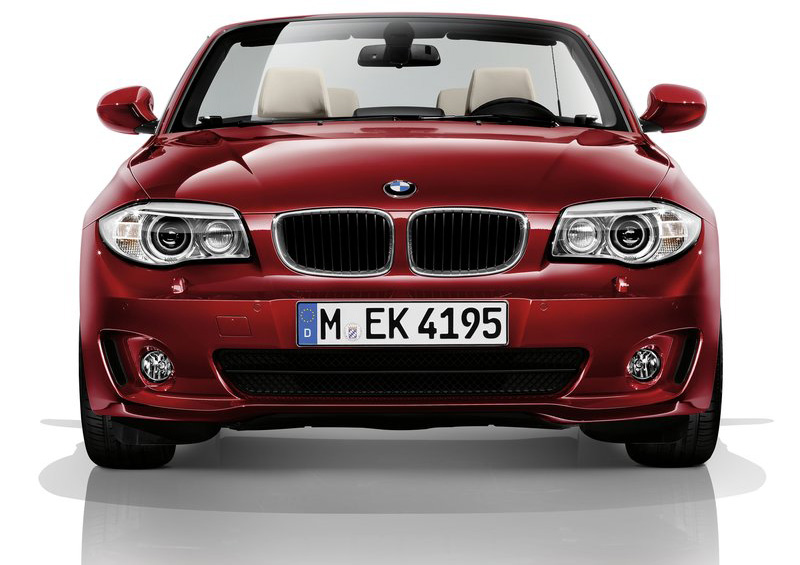
BMW 1-Series Convertible, 2012, BMW's Efficient Dynamics


BMW 1-Series Convertible, 2012

The BMW announced several modifications to the 2012 BMW 1-Series Convertible that accentuate efficiency and premium quality. The unmistakable profile of the BMW 1-Series Convertible, which represents the purest expression of BMW DNA is now sharper than ever. The new design of the front fascia includes BMW's innovative Air Curtain that counters turbulence near the wheel arches and so reduces the aerodynamic resistance of the vehicle. New exterior design accents have been incorporated into the headlight and tail light clusters. In the interior, new switches and controls have a more refined look and feel. The updated BMW 1-Series Convertible will go on sale in the Spring of 2011.
 
The BMW 1-Series Convertible continues the tradition established by the iconic BMW 2002 sport sedan. The essence of such driving purity - a responsive inline-6 engine perfectly positioned within a rear-drive chassis to provide balanced, sporty dynamics - is at the heart of this compact four-seat convertible. For the 2012 model year, two versions are available with inline-6 power: the 128i and the 135i.

Powered by a 3.0-liter, 230 horsepower inline-6 engine that generates 200 lb-ft of torque, the 128i Convertible features BMW's Valvetronic throttle-less intake technology and aluminum/magnesium construction - core elements of BMW's Efficient Dynamics.

The 2012 BMW 135i features BMW's newest, 3.0-liter inline-6 engine. Equipped with a single, twin-scroll turbocharger and BMW's revolutionary Valvetronic throttle-less intake technology, the engine produces 300 horsepower and 300 lb-ft of torque. Refered to internally as the "N55", the engine reaches peak torque at 1,200 rpm and maintains peak torque all the way to 5,000 rpm. With High Precision direct gasoline injectors, optimum performance and fuel efficiency are achieved with even faster engine response across the entire engine speed range. For the 135i Convertible, acceleration from 0-60 mph is accomplished with the standard 6-speed manual transmission in 5.4 seconds.

The 135i can be equipped with BMW's 7-speed Double Clutch Transmission (DCT), as featured on the BMW Z4 Roadster. Equipped with DCT, the 135i Convertible will accomplish the 0-60 mph sprint in a scorching 5.3 seconds. A 6-speed Steptronic automatic remains o ptional on the 128i. So equipped, the 128i Convertible runs 0-60 mph in 7.0 seconds, or 6.4 seconds with the standard 6-speed manual transmission.

Innovative Aerodynamics: Air Curtains

Consistency between form and function is crucial to engineers at BMW who seek perfect balance of various aerodynamic factors in the wind tunnel. As a result, the new Air Curtain is BMW's latest aerodynamic innovation. Introduced first on the BMW 1-Series M Coupe, the Air Curtain will now be a standard feature on the 128i Convertible. The Air Curtain improves air flow around the front wheel arches with the benefit of significantly reduced turbulence. The 128i Convertible can also be equipped with special Aero Wheels to further enhance the performance of the Air Curtain system.

The innovative feature consists of openings in the outer section of the lower front fascia that route high-pressure air through ducts at each front corner. The ducts are approximately 10 x 3 centimeters wide and are designed to channel air to openings at the front of each wheel arch, where it is discharged through a very narrow opening at high speed. The escaping air stream covers the side of the front wheels like a curtain, thereby reducing aerodynamically unfavorable turbulence around the rotating wheels.

The Air Curtain has a key role to play in the development of future aerodynamic innovations. An example of the air curtain principle was first presented in the concept study BMW Vision Efficient Dynamics at the International Motor Show (IAA) in Frankfurt in 2009, and the developers of the BMW 1-Series M Coupe took on the pioneering task of applying this element to a production vehicle. To do so, they utilized the unique capabilities of the new full-scale "rolling road" Aerolab wind tunnel at the BMW Group's new Aerodynamic Testing Center. Now it has been added to the 128i Convertible.

Distinctive BMW Convertible appearance
In a mere 22 seconds - even on the move at speeds up to 25 miles per hour - occupants of the BMW 1-Series Convertible can go from encapsulated comfort to top-down exhilaration. If conditions dictate, the electro-hydraulically-operated softtop can be raised within the same 22 seconds, producing a distinctive silhouette enhanced by long frameless doors. The characteristic features of the BMW kidney-shaped grill, front skirt, door sills and rear skirt are identical to those of the BMW 1-Series Coupe.

The standard soft top is available in either black or taupe cloth, but it is the optional Moonlight Black version which is unique to the BMW 1-Series Convertible. Interwoven with fine shiny metallic fibers, this distinctive top produces a shimmery metallic silver appearance in sunlight. The visual effect enhances the convertible's exciting range of nine colors which includes an exclusive hue: Cashmere Silver Metallic.

A distinctive feature of the BMW 1-Series Convertible is the flared shoulder line which runs parallel to the road. This shoulder line flows from the hood past the A pillar to the trunk lid, forming a surface which encompasses the entire interior, giving the impression of a boat deck.

The view from the rear is influenced by the position of the softtop: with the top lowered, completely concealed in the tail, the look is flat and elegant; the appearance with the top up is broad shouldered. The trunk lid has an integrated spoiler chiseled into the rear end of the car to accentuate the short rear section. On the 135i, an additional lip spoiler provides greater downforce on the rear end at high speeds.

The individual sections within the L-shaped rear taillights give the vehicle a lower, sportier look. Horizontal lights integrated in the rear light clusters offer a homogeneous lighting effect with the help of light-emitting diodes (LEDs). This light design, as found on other BMW models, makes the BMW 1-Series Convertible stand out at night. Also, the Adaptive Brake Lights operating in two stages in relation to brake application force are yet another feature typical of BMW, with the additional benefit of extra safety on the road.

The standard (on the 135i) Adaptive Xenon Headlights (optional on the 128i), complete with integrated cornering lights, make driving in the dark safer than ever. The daytime running light function, in typical BMW style, uses the four corona rings around each headlight to enhance the visibility of the car under normal and "murky" light conditions.

Convertible interior features technology enhanced comfort, convenience

Two unique BMW 1-Series Convertible features provide increased driver and passenger comfort, thus improving the overall experience regardless of the top's position. The optional Boston leather incorporates BMW's Sun Reflective Technology where pigments worked into the upholstery mitigate the effect of the sun's ultraviolet rays. Excessive heating of the seats and armrest is diminished, especially for darker interior colors. The overall effect can produce surface temperatures some 20 degrees Fahrenheit below a comparable "normal" leather interior.

The standard upholstery is sporty and comfortable Leatherette, which is also the covering on the optional Sport Package's sport seats with enhanced side support (Boston leather can be selected for this package).

The climate-control system in the BMW 1-Series Convertible has an additional convertible mode (compared to the system in the BMW 1-Series Coupe) designed for open-roof conditions. The three standard modes; gentle, medium and intensive, react primarily to interior sensors, while the convertible mode reacts less to interior temperature and more to the exterior temperature and sunlight factors to establish the intensity of the ventilation. Turbulence in the roof-down cabin can be reduced by an available wind deflector which can be affixed to the sides of the vehicle with a few adjustments. The wind deflector allows for conversation at normal sound levels and the ability to enjoy the wide variety of audio and communication offerings which include SIRIUS satellite radio, HD radio, the optional Premium Sound system, and Bluetooth. For simple and straightforward connection of an MP3 player, an auxiliary input jack is standard and a USB port for direct control of an Apple iPod or iPhone media player is available as an option.

The control console for the entertainment and climate-control functions is integrated smoothly and harmoniously into the dashboard through its soft radii and flowing surfaces. With the optional navigation system, the iDrive controller is integrated in the center console, following BMW's characteristic philosophy of full driver control at all times. Galvanized pearl gloss surfaces adorn the interior door handles, the glove compartment handle, the radio's rotary knobs, the knobs of the automatic climate control system, the iDrive controller, and the ornamental trim strips featured on the sport steering wheel.

Spacious trunk supplemented by folding seat backs and storage bag

An active couple can carry their gear, regardless of the season, thanks to the generous trunk space offered by the BMW 1-Series Convertible. Two golf bags will fit in the trunk of the BMW 1-Series Convertible - even with the top down! Lowering the soft top produces a storage space that is 8 cubic-feet, which does not include the optional large storage bag that extends into the passenger compartment and can accommodate two snow boards or a golf bag without soiling the upholstery. A zippered opening allows access into the storage bag from within the passenger compartment.

The High-tech suspension with newly-developed differential

In typical BMW configuration, the BMW 1-Series Convertible transmits power to the rear wheels exclusively. This concept - engine at the front, drive wheels at the rear - guarantees optimum traction, near-perfect weight distribution front-to-rear, excellent directional stability, and predictable handling.

The BMW 1-Series Convertible has a sophisticated suspension system with an aluminum double-pivot front suspension and a five-link fully independent rear suspension in lightweight steel. BMW's Dynamic Stability Control (DSC) also includes a Dynamic Traction Control (DTC) function that provides electronic intervention to prevent loss of vehicle control, but at a higher threshold before activation. This allows the driver to experience more spirited driving on dry roads and offers more flexibility when driving in more challenging conditions such as in snow. If the driver desires, both DSC and DTC can be disabled entirely. Optional Active Steering - a variable ratio steering system exclusive to BMW - is available on the 135i Convertible. In addition to its duties as a safety system, the DSC system on the 135i Convertible is programmed specifically to enhance performance-oriented driving.

The rear differential on the BMW 1-Series comes from a new generation of final drives optimized for running smoothness and fuel efficiency. Featuring double-helical ball bearings for the first time, the differential runs at an even lower operating temperature reached more quickly than before thanks to the reduction of fluid required in the differential. Electronic rear brake management is always used to simulate a differential lock for stronger acceleration in turns and low-traction conditions.

The front suspension on the BMW 1-Series is also built to a unique standard in its competitive group. The double-pivot spring and strut front suspension with its anti-roll bar, is made largely of aluminum and offers an optimum combination of stiffness and low weight. The stable track control arms and thrust rods, as well as near-perfect wheel positioning, make an important contribution to the car's driving dynamics.

M-inspired design for the M Sport Package

Model year 2009 saw the introduction of a new M Sport Package, which is standard on the 135i and optional on the 128i. Features of the M Sport Package include an Aero kit for reduced lift at speed (standard on 135i), an increased top speed limiter, better brake cooling, and enhanced aesthetics while the Sports Suspension offers higher traction and reduced body roll with unique wheels and performance tires. Unfortunately, the M Sport Package deletes the Air Curtain feature.

The Sports Suspension also includes a high-performance brake system incorporating 6-piston fixed calipers on the front and 2-piston calipers at the rear. Additionally, the M Sport Package for both models includes BMW Individual high-gloss Shadowline exterior trim, sport seats, and M branded trim components including driver footrest, gearshift knob (for manual transmission), and door sills. Finally, LeMans Blue Metallic exterior paint is available exclusively when the M Sport Package is ordered.

Safety equipment maximized for convertible design

The four standard airbags in the 2012 BMW 1-Series Convertible are designed for the optimum protection of the car's occupants. The advanced frontal airbags are activated in stages relative to impact severity while the side airbags integrated into the sides of the front seat backrests reduce the risk of injury at chest, hip and head levels in side impact situations. The BMW 1-Series Convertible also comes with crash-optimized seats with active headrests designed to reduce the risk of neck injury in an impact from the rear.

BMW 1-Series, 2012


BMW 1-Series, 2012

The second generation offers state-of-the-art engine and suspension technology, further improvements in fuel efficiency, significantly more space and an innovative range of features and equipment. Still the only rear-wheel-driven car in its class, it builds on the strengths of its predecessor, which has already sold more than one million units worldwide. With its outstanding handling and design, innovative technology and premium image, the new BMW 1-Series has consolidated its position as a pioneering individualist in the competitive five-door segment.

BMW's entry-level model has achieved maturity, offering an even better balance between sportiness and driving comfort, improved functionality, and numerous driver assistance systems previously available only in higher segments. This is also apparent in its size. The body of the new BMW 1-Series is 85 millimetres longer than its predecessor, at 4,324 millimetres, while the wheelbase has widened by 30 millimetres to 2,690 millimetres. The car also looks more powerful because its overall width has increased by 17 millimetres to 1,765 millimetres (due to an increase in track of 51 millimetres at the front and 72 millimetres at the rear), whereas its height remains unchanged at 1,421 millimetres. The rear seats have 21 millimetres more legroom, and the luggage compartment has expanded by 30 litres to 360 litres.

The design of the new generation is a powerful expression of the latest technological advances. The model's fresh, youthful image has been stylishly updated, with precision-moulded body surfaces and a modern, functional interior both underlining its premium status. Another innovation is the BMW Sport Line and BMW Urban Line, two ranges of interior and exterior design features and equipment that provide exclusive personalization opportunities.

The engines in the new BMW 1-Series are four-cylinder models using BMW Twin Power Turbo technology. The petrol engines are part of a new generation, combining an impressively sporty feel with exceptionally low fuel consumption and emissions. The 1.6-litre engines have twin-scroll turbochargers, direct injection, VALVETRONIC and Double-VANOS. The new BMW 116i achieves 100 kW/136 hp, and the new BMW 118i 125 kW/170 hp. These represent increases of 10 kW and 20 kW on the previous versions, with fuel consumption reduced by up to 10 per cent. The 2.0-litre turbocharged diesel models have been radically redesigned, featuring variable turbine geometry and common-rail direct fuel injection. The new BMW 116d (85 kW/116 hp), the new BMW 118d (105 kW/143 hp) and the new BMW 120d (135 kW/184 hp) have further consolidated the BMW 1-Series' record of superior fuel efficiency in the compact segment.

The new BMW 1-Series is the first and only car in its class to be optionally available with an eight-speed automatic gearbox. Like its predecessor, it also incorporates the extremely wide-ranging BMW Efficient Dynamics technology package as standard. This includes the Automatic Start/Stop function, available with both the manual and automatic transmissions, and ECO PRO mode, activated using the driving experience switch (included as standard), for even better environmental performance. There are also plans to expand the range with the BMW 116d Efficient Dynamics Edition. This will have an output of 85 kW/116 hp, but additional fuel-saving and emission-reducing technologies will enable it to achieve fuel consumption of 3.8 litres per 100 kilometres and a CO2 emissions figure of just 99 grams per kilometre over the EU combined cycle (provisional figures).

Exciting, elegant, innovative design
The drive-train layout, with a longitudinally mounted in-line engine at the front and rear-wheel drive, is unique within the compact segment. This improves the new BMW 1-Series' handling, and is also reflected in its design, with BMW's typical proportions: long bonnet, wide wheelbase, swept-back passenger cell. The new BMW 1-Series is the embodiment of responsiveness and innovative elegance in a compact car, with a youthful, lively design and high-quality features adding to the excitement.

The front of the car is dominated by the large BMW kidney-shaped radiator grille, boldly shaped headlight units and three-section air intake. The grille is tilted forwards, adding emphasis to the challenging stance of this most sporty of compact models, while the surrounding areas catch the light and create a strong sense of three-dimensionality, with four contour lines on the bonnet forming a V that points towards the grille. The typical BMW double-round headlights have accent trim across their tops. In combination with the optional bi-xenon headlights, this creates a strongly focused look, powerfully enhanced by the direction indicators set into the inner light rings of the headlights and an LED accent light. In another innovation for BMW, the side indicator lights are integrated in the exterior mirrors.

The proportions of the new BMW 1-Series are even more strikingly apparent. The slightly sloping roof line, sporty, angled rear windscreen and flat side windows give the car a coupé-like feel, while the Hofmeister kink - the low forward bend at the back end of the side windows - extends well into the C-pillar, making the door aperture wider and facilitating entry to and exit from the rear seats.

The wide-set wheel arches reinforce the broad, powerful impression created by the back of the new BMW 1-Series. The wide-opening, slightly concave tailgate is opened by pressing the top section of the BMW emblem that sits at its centre, and the rear lights are also set well apart, creating a strong horizontal emphasis that is heightened by their deep surrounds.

The interior: premium finish, dynamic lines, driver-friendly cockpit
Inside, a combination of typical BMW design features and innovative accents gives the new BMW 1-Series a fresh, youthful and modern feel, with a focus on spaciousness and driving pleasure. Lines and surfaces are dynamic and forward-leaning, with high-quality, precision-finished materials reflecting the model's premium specifications. BMW's characteristic driver-friendliness is apparent in the angled displays and controls in the middle of the instrument panel, and the ergonomic contours of the centre console, designed for maximum visibility. The interior surfaces are layered, another innovation which gives the new BMW 1-Series an organic look and feel.

The ultimate in personalization: BMW Sport Line and BMW Urban Line make their debut
The exclusive new BMW Sport Line and BMW Urban Line of interior and exterior equipment help to show off the high-tech, dynamic facets of the new BMW 1-Series to best advantage.

The BMW Sport Line includes sports seats with specific coverings, leather sports steering wheel with contrasting red stitching, a red keyclasp, adjustable armrests, high-gloss black interior trim and matt coral accent strips. The instruments have specific number and scaling designs. The ambient lighting can be switched between orange and white the inclusion of this feature in the centre console and footwell is exclusive to the BMW Sport Line.

Another features of the BMW Sport Line include 16-inch star-spoke light-alloy wheels, black exhaust pipe end trim, and door sill finishers with "BMW Sport" lettering. The kidney bars, the central air intake trim bar, the side intake surrounds and the rear bumper trim are all high-gloss black. Additional options include high-gloss black mirror caps and 17-inch two-tone light-alloy wheels.

The BMW Urban Line includes specific cloth/leather seats, a leather sports steering wheel, adjustable armrests, and contemporary acrylic glass interior trim, which creates a strong sense of depth and is available in white or black with matt oxide silver accent strips. A striking effect is also provided by the ambient and courtesy lights, which can be switched between orange and LED royal blue. An additional light source on the B-pillar enhances the effect of the illumination.

The distinctive exterior includes specific 16-inch V-spoke alloy wheels or optional 17-inch high-gloss white wheels with an angled surface, and white rear bumper trim. Additional design accents on the front include white kidney bars with chrome-plated fronts and a white trim bar for the centre air intake. The side intake surrounds are painted in the same colour as the car, and the BMW Urban Line also includes door sill finishers with "BMW Urban" lettering and a white keyclasp. White mirror caps are available as an option.

The new generation of petrol engines: dynamic power delivery and outstanding fuel efficiency thanks to BMW TwinPower Turbo technology.
The new BMW 1-Series is currently available with a choice of two latest-generation four-cylinder petrol engines and three radically redesigned four-cylinder diesel units.

The 1.6-litre petrol engines making their debut in the BMW 116i and BMW 118i models use BMW TwinPower Turbo technology, consisting of a twin-scroll turbocharger, High Precision Injection, VALVETRONIC variable valve control and Double-VANOS variable camshaft control.
This design is based on that of the multi-award-winning 225 kW/306 hp in-line six-cylinder engine with BMW TwinPower Turbo found in models such as the BMW 135i and BMW 135i Convertible. Like that engine, the new four-cylinder units too are part of BMW's EfficientDynamics design strategy, which aims to continually increase driving pleasure while reducing fuel consumption and emissions.

The first time that four-cylinder engines have been fitted with BMW TwinPower Turbo, which represents an exceptionally fuel-efficient way of boosting output. In normally aspirated engines, responsiveness could only be enhanced to the same degree by significantly increasing capacity, and therefore weight and fuel consumption.

The four-cylinder engine of the new BMW 118i, which has an all-aluminium crankcase, has a maximum output of 125 kW/170 hp at 4,800 rpm, and a maximum torque of 250 Nm at between 1,500 and 4,500 rpm. It is exceptionally responsive, accelerating the car from 0 to 100 km/h in 7.4 seconds and on to a maximum speed of 225 km/h. Improved efficiency is reflected in combined-cycle fuel consumption of 5.8 to 5.9 litres per 100 kilometres and CO2 emissions of 134 to 137 grams per kilometre (EU test figures, variations due to differences in the tyres fitted).

The new BMW 116i's four-cylinder engine provides significantly improved driving dynamics compared to the predecessor model. It has an output of 100 kW/136 hp at 4, 400 rpm and a maximum torque of 220 Nm between 1,350 and 4, 300 rpm. The car takes 8.5 seconds to reach 100 km/h from a standing start, and has a maximum speed of 210 km/h. The new BMW 116i's fuel consumption over the combined cycle is 5.5 to 5.7 litres per 100 kilometres, and its CO2 emissions are 129 to 132 grams per kilometre.

An evolutionary step forward: four-cylinder turbodiesel with BMW Twin  Power Turbo technology and even greater fuel efficiency.
Wide-ranging design modifications have enabled the four-cylinder 2.0-litre turbodiesel engines in the new BMW 1-Series to build on their competitive advantage in the areas of output and fuel efficiency. These include aluminium crankcases, reduced engine friction, thermodynamically optimized turbochargers and variable turbine geometry, next-generation common-rail direct injection and magnetic-valve injectors.

The enhancements represent the latest stage in the success story of BMW four-cylinder diesel engines, which earned the predecessor of the new BMW 118d the title of World Green Car of the Year.
The new BMW 120d marks another major advance, with a 5 kW increase in maximum output to 135 kW/184 hp at 4,000 rpm, and maximum torque boosted by 30 Nm to 380 Nm between 1,750 and 2,750 rpm. It reaches 100 km/h from a standing start in 7.2 seconds, and has a maximum speed of 228 km/h. Combined-cycle fuel consumption has been reduced to 4.5 to 4.6 litres per 100 kilometres, with CO2 emissions of 119 to 122 grams per kilometre (EU test figures, variations due to differences in the tyres fitted).

The 4-cylinder diesel engine of the new BMW 118d has a maximum output of 105 kW/143 hp at 4,000 rpm, and maximum torque of 320 Nm between 1,750 and 2,500 rpm. It accelerates from 0 to 100 km/h in 8.9 seconds, and has a maximum speed of 212 km/h. Its combined-cyle fuel consumption is 4.4 to 4.5 litres per 100 kilometres, with CO2 emissions of 115 to 118 grams per kilometre (EU test figures, variations due to differences in the tyres fitted).

The new entry-level BMW 116d has a maximum output of 85 kW/116 hp at 4,000 rpm, and maximum torque of 260 Nm between 1,750 and 2,500 rpm. It accelerates from 0 to 100 km/h in 10.3 seconds, and has a maximum speed of 200 km/h. Its combined-cyle fuel consumption is an outstanding 4.3 to 4.5 litres per 100 kilometres, with CO2 emissions an equally impressive 114 to 117 grams per kilometre (EU test figures, variations due to differences in the tyres fitted).

BMW Efficient Dynamics technology puts the new BMW 1-Series in a class of its own
Back in 2007, the BMW 1-Series set a new global benchmark, with a unique range of technologies to reduce fuel consumption and emissions being included as standard. Today, the new BMW 1-Series extends the scope of the BMW EfficientDynamics programme. The diesel versions have a centrifugal-force pendulum built into the dual-mass flywheel to compensate for rotational irregularities and ensure a smooth ride at low revs.

The Automatic Start/Stop function, which switches off the engine when it is stationary at traffic lights or in slow-moving traffic, is included as standard in the new BMW 1-Series, with both manual and automatic transmissions. ECO PRO mode, which is activated by the driving experience switch, adjusts the engine map, heating, air conditioning, and mirror/seat heating to minimize fuel consumption. The resulting increase in range is shown on a display.

The new BMW 1-Series will embody the concept of fuel-efficiency like no other premium car, building on the strengths of its predecessor in this area. At a later date, the range will be expanded with the BMW 116d EfficientDynamics Edition. This will be powered by a 1.6-litre diesel engine, and feature a number of fuel-saving and emission-reducing technologies, including solutions to further optimize drive-train efficiency, improve aerodynamic performance and reduce rolling resistance. The BMW 116d EfficientDynamics Edition will have an output of 85 kW/116 hp, with fuel consumption of 3.8 litres per 100 kilometres and CO2 emissions of 99 grams per kilometre over the EU combined cycle (provisional figures).

8-speed automatic transmission: sporty, fuel-efficient, and unique in a compact car
The standard six-speed manual petrol and diesel versions of the new BMW 1-Series offer efficient power transmission and precise gear changes.
The BMW 1-Series is also the only compact car also available with the option of an eight-speed automatic transmission, offering fast, smooth gear changes and excellent fuel efficiency. The innovative architecture of its wheel set allows more gears and a better spread of ratios, with barely any increase in weight over the existing six-speed automatic gearbox for the BMW 1-Series.

The unusually high efficiency of the eight-speed automatic transmission means that fitting it to the most powerful new BMW 1-Series models actually results in lower fuel consumption and CO2 figures than with a manual transmission.
The Steptronic function used in the automatic transmission allows gear changes to be initiated manually using the electronic selector lever. A further option is the eight-speed sports automatic transmission, which enables even more dynamic gear changes, and includes shift paddles on the steering wheel.

Perfect handling: high-quality suspension technology, even weight distribution and improved stability control
The new BMW 1-Series boasts best-in-class suspension technology, with a double-joint cross-strut front axle with McPherson struts and sway bars, and a five-link rear axle. The high aluminium content of the front axle structure effectively reduces the unsprung mass, while noise levels have also been reduced and crash performance improved.

The front and rear axles have double elastic bearings and extra-large bearing blocks for increased comfort and responsiveness. The new BMW 1-Series has a wider track than its predecessor (51 millimetres wider at the front, 72 millimetres wider at the rear), and the almost perfect 50:50 weight distribution helps to translate the dynamic advantages of the rear-wheel drive layout into an exciting and agile ride.

The new BMW 1-Series has electromechanical power steering as standard, combining typical BMW precision with very low energy consumption. The optional Servotronic function provides speed-dependent power assist. Variable Sport Steering, also available as an option, reduces the number of steering wheel rotations required to make sharp turns. In this mechanical system, steering ratios are adjusted using a variable steering rack. Parking and turning are safer and easier, requiring minimal steering effort, but the typical BMW steering precision and directional stability at high speeds are maintained.

As an alternative to the standard 16-inch wheels, the new BMW 1-Series is also available with 16, 17 and 18-inch light-alloy wheels. Its responsiveness and powerful braking in emergency situations are partly due to DSC Dynamic Stability Control, and the car also has ABS anti-lock braking, DTC Dynamic Traction Control, CBC Cornering Brake Control and DBC Dynamic Braking Control. Other features now include braking assistance, fading compensation, brake drying and hill assist.

DTC mode increases the intervention thresholds of DSC, making it easier to drive on loose sand or deep snow. By allowing slight slippage of the drive wheels, it also facilitates controllable oversteer. DSC Off mode activates the electronic rear axle differential locking system. If either of the drive wheels suffers wheelspin while accelerating through tight bends, brake force is applied to this individually, so that the opposite wheel maintains traction.

Torsion-resistant body, optimal weight, wide range of safety features
The new BMW Series 1's lightweight body makes it more agile and improves passenger safety, with high-strength steel being used to increase torsion resistance and the strength of the passenger safety cell while minimising weight. Crumple zones and clearly defined load paths absorb the force of an impact and deflect it away from the passenger cell.

The standard safety package comprises front airbags, side airbags integrated into the seatbacks, front and rear head airbags, three-point automatic seatbelts in all seats, front seatbelt tension limiters and pre-tensioners, and an ISOFIX child seat mounting system in the rear.

BMW ConnectedDrive: unique comfort, safety, information and entertainment options
The new BMW 1-Series' high-tech presence is reflected in an impressive range of driver assistance and mobility services which is unique in a compact car. The BMW ConnectedDrive options network the driver with the vehicle and the outside world to improve comfort and safety while providing a wide spectrum of information and entertainment.

The Adaptive Headlight function incorporated in the optional xenon headlights adjusts the illumination depending on the vehicle's speed, steering angle and yaw rate. At low speeds, the turning lights integrated into the foglamp illuminate the road in the direction of travel. Other features include rain sensor, automatic headlight control, high beam assistance, park distance control, which allows safe, precise parking, with the image from the reversing camera appearing on the iDrive control display. Park assist aids parallel parking by identifying suitable spaces and steering the car into place if required.

Cruise control with brake function controls the engine and brakes while setting the optimum automatic gear to maintain the speed selected by the driver. The Lane Departure Warning facility now incorporates Collision Warning, which uses a camera at the bottom of the rear-view mirror to monitor the road markings and prevent unintended changes of direction.

The camera also monitors other vehicles and, if required, sounds a two-stage alarm to prevent collisions. A visual warning appears on the instrument panel if a minimum distance set by the driver is not maintained, and a flashing symbol and acoustic signal are activated if avoiding action is required.
The Speed Limit Info system has been expanded, with symbols on the instrument panel showing known speed limits and no-passing signs above or beside the road as recorded by its camera.

Monday, October 3, 2011

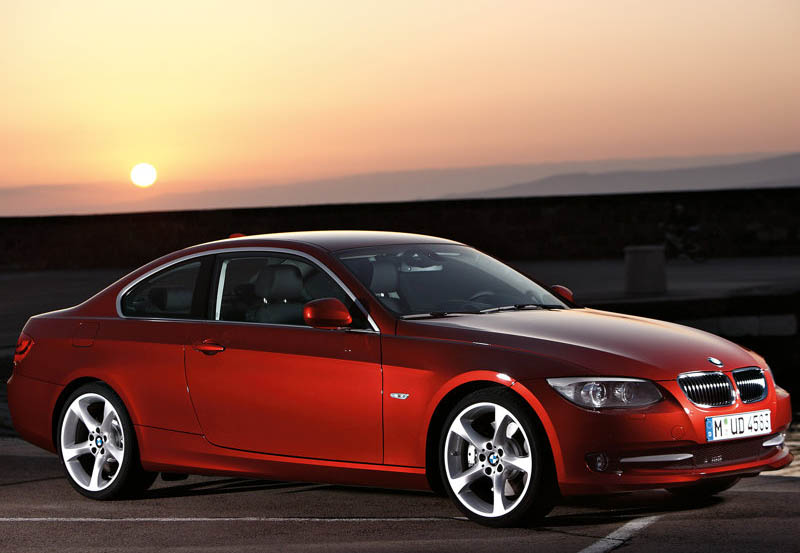
BMW 3-Series Coupe, 2011, BMW 3-Series Convertible


BMW 3-Series Coupe, 2011

Design. Reflecting the legendary distinction of BMW Coupes and Convertibles
The profile of the BMW 3-Series Coupe and Convertible is instantly recognizable at first glance. Beyond the basic shape of the car and its classic lines, the new design of the headlights, the enhanced depth and detail of the taillights, the interior, and even the exterior mirrors were specifically created for the Coupe and Convertible. These unique design elements reflect the sporty character of the car. The driver who chooses a two-door vehicle desires a car with dynamic looks as well as driving performance. With this in mind, BMW engineers and designers set out to create a unique, unmistakable blend of design features and most importantly, driving pleasure.

The classic proportions, three design lines—the shoulder, character and lower sill lines— enhance the sleek appearance. Both the shoulder line and character line stretch uninterrupted to the back of the car, allowing one's eye to move quickly and smoothly from front to rear along the entire length of the car. The sill line of the lower edge of the door flows into the front and rear air dams, reinforcing the dynamic nature of newest BMW 3-Series Coupe and Convertible.

The combination of lines flowing into one another elegantly emphasizes the vehicles' performance potential. While the shoulder line rises slightly but consistently from front to rear, the character line flows in a long, stretched arch all the way from the front fender to the new taillights. As the sill line, by contrast, moves up slightly to the rear in a slow and gentle curve, the distance between the character and sill lines becomes smaller near the rear wheel arches. The fender flare around each rear wheel also serves to give the character line extra tension in both an upward and outward direction.

Attractive new innovations at the front, side, and rear - integrated precisely into the overall look of the car- give greater emphasis to the sportiness of both models. At the same time, these modifications slightly extend the overhangs front and rear (now 1.14" and 0.12" longer, respectively), which adds a sleeker and even more athletic appearance.

The new, widened kidney grille, a signature feature of every BMW, suits the broad new hood and stands out from the surfaces around it. Interaction with the three-dimensional kidney frame creates a look of power and unique style. The frame around the kidney grille now features a chrome band precisely twisted within itself.

The BMW 3-Series Coupe and Convertible come standard in the U.S. with Xenon Adaptive Headlights, accented by BMW's signature corona light rings. At the top, the new headlights merge into a trim bar cutting off the light beam to create that concentrated, focused look typical of a genuine BMW. The corona rings, now powered by super-bright LED light sources, can serve as daytime running lights (if that feature is activated), and also as evening city lights, making the Coupe and Convertible instantly recognizable as a BMW, day or night. The upper edge of each headlight fixture is also illuminated by an LED light source.

The new design of the taillights is unique to the BMW 3-Series Coupe and Convertible. The rear light cluster feature two-piece L-shapes and are further accentuated by a new color scheme. With two rows of light tubes that illuminate simultaneously, they create a night design with depth and dimension. Integrated flush into the body of the car, the lights are split into two sections and extend up the trunk lid, blending with the character lines from the side profile. Horizontal LED tube taillights give the car an unmistakable look at night. The horizontal flowing lines accentuate the wide track and low stance of the Coupe and Convertible.

The exterior mirrors receive a new design, adding further innovation to the unique looks of the BMW 3-Series Coupe and Convertible. They blend harmoniously into the side view and silhouette of each new model.
Deep Sea Blue Metallic, Vermillion Red Metallic, and Mineral White Metallic exterior colors will each become available for the new BMW 3-Series Coupe and Convertible this spring.

Interior: a truly stylish ambiance
The emphasis on individual style, dynamic performance and exclusivity continues within the interior. Here again, the focus is on the driving experience, as announced by the standard leather multifunction steering wheel. Horizontal lines dominate the surfaces on and around the instrument panel which blend with the lines of the center console door panels to give the interior a light but dynamic feel. In true BMW fashion, all operational and informational elements essential to driving are grouped on and around the steering wheel. Climate controls, as well as those for the audio and navigation systems, are within easy reach of the front passenger.

The BMW 3-Series Coupe and Convertible come standard with Dark Burl Walnut wood trim. As a choice, Bamboo Anthracite wood, Light Burl Walnut wood, and Aluminum trim are optional. Like the standard Dark Burl Walnut, these materials appear on the dash, front and rear consoles, doors and rear side panels.

All-new turbocharged engine with Valvetronic for 335i
BMW 3-Series Coupe and Convertible customers have a choice of two inline-6 engines that are the worlds' finest. The 328i features 230 horsepower while the 335i has 300 horsepower and is the first inline-6 equipped with a single twin-scroll turbocharger, BMW's Valvetronic throttle-less intake technology, High Precision direct fuel injection, and all-aluminum construction.

The 335i's new inline-6 engine displaces 3.0-liters and develops maximum output of 300 hp at 5,800 rpm, with peak torque of 300 lb-ft available all the way from 1,200-5,000 rpm. Redline is 7,000 rpm. This is the same level of performance as the previous 3.0-liter twin-turbo inline-6 but with the innovation of twin-scroll technology and the integration of Valvetronic, this new engine is even more fuel efficient.

Historically, BMW engineers were never satisfied with the most often-cited downside to turbocharging: the frustrating "turbo lag" that occurs between the time at which driver presses the accelerator pedal and when the turbocharger develops sufficient rotation to increase power. Turbo lag is usually worse at low engine speeds. Other drawbacks included relatively high fuel consumption and poor emissions output. At the time, turbocharger technology was not a reliable, practical or efficient was to make power. For these and other reasons, BMW put turbocharged gasoline engines on the shelf for more than 20 years.

The new N55 is the first BMW inline-6 to combine turbocharging, High Precision direct fuel injection, and Valvetronic variable intake technology. It features a single, mid-sized turbocharger with a "twin-scroll" housing to boost performance and minimize the response lag. Thanks to its housing design which maintains proper separation between streams of exhaust gasses, the turbocharger builds up pressure much faster than previous-generation turbochargers, thus eliminating even the slightest tendency for lag.

Using Valvetronic for the first time on a turbocharged inline-6 allows the engine to "inhale" air for combustion with virtually no delay and with reduced pumping losses. As a result, the engine makes power more quickly than ever before, and this is proven by the N55's ability to reach peak torque at 1200rpm, 200rpm earlier than its predecessor.

Turbocharging typically includes intercooling of the engine's induction air, that is, cooling the compressed air that emerges, very much heated up by the compression process, from the turbocharger(s). Sometimes it's done with coolant; in the case of the N55 engine, it's accomplished with outside air. Intercooling is necessary to reduce the temperature of the incoming air to preclude detonation or "knocking" that can reduce power or, in the extreme, damage the engine. Of course, the N55, like all other current BMW engines, is equipped with knock control as part of the Digital Motor Electronics (DME) engine management system. On the N55 engine, the DME is now mounted directly to the top of the engine for better packaging and weight savings.

The significant loads and cylinder pressures of the N55 300-hp engine required the use of an aluminum engine structure with cast-iron cylinder sleeves. Altogether, the N55 weighs about 427 lbs. The 335i Coupe and Convertible dual exhaust system runs at both sides of the vehicle. At low loads, a flap channels most gas through one side to reduce low-frequency exhaust "rumble." The 335i Coupe and Convertible feature an air-to-oil external oil cooler mounted in one wheel well as opposed to the N52's coolant-to-oil unit.

The peak power of 300 hp at 5800rpm has already been mentioned; this is fully 70 hp up on the 2011 328i models. At least as important is the fact that this engine can deliver its peak torque from 1200 rpm - not far above idling - to 5000 rpm. On the road, this power and torque result in outstanding performance. The 335i Coupe and Convertible can accelerate from 0 - 60 mph in just 5.3 (5.5) seconds and 5.5 (5.7) seconds, respectively, when equipped with the manual (automatic) transmission. The sense of urgency continues all the way to the electronically limited top speed of 130 mph (150 mph when equipped with the optional Sport Package). The 335i xDrive coupe accelerates 0-60 mph in 5.2 (5.3) seconds when equipped with the manual (automatic) transmission.

Finally, the new N55 engine is able to achieve a more favorable emissions signature than its predecessor. The single turbocharger has only one exhaust path and feeds a single catalytic converter in place of the previous engine's two. This means the exhaust gases are concentrated at the catalytic converter for better cold-start emissions performance, making the N55 a more environmentally friendly engine.

The 328i Convertible is powered by BMW's 230 horsepower, 200 lb-ft, 3.0-liter inline-6 engine, known internally as the N52. Its magnesium/aluminum construction and Valvetronic variable valve lift are features found only on BMW engines. The N52 achieves impressive progress on all performance and technology fronts, especially in its remarkably light weight of 357 lbs. An aluminum/magnesium engine block, hollow camshafts, plastic camshaft cover, improved combustion chambers, a further evolved Double VANOS[1], higher fuel injection pressure, sophisticated engine electronics, an electric coolant pump, a variable-volume oil pump and an oil/coolant heat exchanger are the other weight-saving features and improvements of this engine over previous generations.

For the Convertibles: Sun-Reflective Leather offers cooler seats
BMW is the first carmaker in the world to use sun-reflective technology to mitigate temperatures on leather seating, armrest surfaces, headrests, and gear shifter. The process uses modified color pigments imbedded in the leather during the production process to reflect the infrared radiation of the sun in wavelengths of more than 720 nanometers.

The leather treatment is able to reduce surface temperatures on dark interior colors by up to 20 Celsius degrees (36 Fahrenheit degrees), and also offers advantages on light-colored upholstery, where the heating effect of sunshine is less severe, reducing the surface temperature by as much as 15 Celsius degrees (27 Fahrenheit degrees). All other qualities of the leather remained unchanged.

BMW 3-Series Convertible, 2011, BMW 3-Series Coupe


BMW 3-Series Convertible, 2011

A 335i model. Internally designated the "N55," this turbocharged, all-aluminum engine features essentially the same "short block" and 3.0-liter displacement of its predecessor, but benefits from five additional years worth of development and refinement. The result is an engine that is more responsive, more fuel efficient, and cleaner-running than its outstanding predecessor, but preserves the previous engine's output and soul: 300 horsepower and 300 lb-ft of torque, and a 7,000 rpm redline. The 6-speed manual gearbox - beloved by North American enthusiast drivers - remains standard, and the well-known 6-speed Steptronic automatic is optional, now featuring "pull-style" shift paddles on the multifunction steering wheel.

Design. Reflecting the legendary distinction of BMW Coupes and Convertibles

The profile of the BMW 3-Series Convertible and Coupe is instantly recognizable at first glance. Beyond the basic shape of the car and its classic lines, the new design of the headlights, the enhanced depth and detail of the taillights, the interior, and even the exterior mirrors were specifically created for the Convertible and Coupe. These unique design elements reflect the sporty character of the car. The driver who chooses a two-door vehicle desires a car with dynamic looks as well as driving performance. With this in mind, BMW engineers and designers set out to create a unique, unmistakable blend of design features and most importantly, driving pleasure.

It all begins with proportions. The new, long hood powerfully symbolizes BMW's loyalty to the inherently balanced inline-6 engine. The long wheelbase, short overhangs, the passenger compartment set aft and the low, sleek roofline which seamlessly slopes into the trunk are all characteristics of the BMW Coupe and BMW retractable hardtop Convertible.

The combination of lines flowing into one another elegantly emphasizes the vehicles' performance potential. While the shoulder line rises slightly but consistently from front to rear, the character line flows in a long, stretched arch all the way from the front fender to the new taillights. As the sill line, by contrast, moves up slightly to the rear in a slow and gentle curve, the distance between the character and sill lines becomes smaller near the rear wheel arches. The fender flare around each rear wheel also serves to give the character line extra tension in both an upward and outward direction.

The new, widened kidney grille, a signature feature of every BMW, suits the broad new hood and stands out from the surfaces around it. Interaction with the three-dimensional kidney frame creates a look of power and unique style. The frame around the kidney grille now features a chrome band precisely twisted within itself.

The BMW 3-Series Convertible and Coupe come standard in the U.S. with Xenon Adaptive Headlights, accented by BMW's signature corona light rings. At the top, the new headlights merge into a trim bar cutting off the light beam to create that concentrated, focused look typical of a genuine BMW. The corona rings, now powered by super-bright LED light sources, can serve as daytime running lights (if that feature is activated), and also as evening city lights, making the Convertible and Coupe instantly recognizable as a BMW, day or night. The upper edge of each headlight fixture is also illuminated by an LED light source.

The new design of the taillights is unique to the BMW 3-Series Convertible and Coupe. The rear light cluster feature two-piece L-shapes and are further accentuated by a new color scheme. With two rows of light tubes that illuminate simultaneously, they create a night design with depth and dimension. Integrated flush into the body of the car, the lights are split into two sections and extend up the trunk lid, blending with the character lines from the side profile. Horizontal LED tube taillights give the car an unmistakable look at night. The horizontal flowing lines accentuate the wide track and low stance of the Convertible and Coupe.

Interior: a truly stylish ambiance
The emphasis on individual style, dynamic performance and exclusivity continues within the interior. Here again, the focus is on the driving experience, as announced by the standard leather multifunction steering wheel. Horizontal lines dominate the surfaces on and around the instrument panel which blend with the lines of the center console door panels to give the interior a light but dynamic feel. In true BMW fashion, all operational and informational elements essential to driving are grouped on and around the steering wheel. Climate controls, as well as those for the audio and navigation systems, are within easy reach of the front passenger.

The BMW 3-Series Convertible and Coupe come standard with Dark Burl Walnut wood trim. As a choice, Bamboo Anthracite wood, Light Burl Walnut wood, and Aluminum trim are optional. Like the standard Dark Burl Walnut, these materials appear on the dash, front and rear consoles, doors and rear side panels.

The standard leatherette upholstery is available in Black and Creme Beige. For the optional leather upholstery, luxurious Dakota leather can be chosen. Here too, the buyer may choose Creme Beige, Oyster, Coral Red, Saddle Brown, Gray, or Black. Upholstery leather appears on the seat facings, door inserts and door handle surrounds; other leather-trimmed items include the gear shift boot, handbrake grip and steering wheel.
In other items of trim that don't change with upholstery or trim options, the interior door handles, gearshift surround trim, steering wheel spokes, instrument dial and engine Start/Stop button surrounds, dash air-outlet adjusting tabs and the optional iDrive controller are in pearl-gray galvanic material.

An elegant ambiance is further created in the interior by special lighting and switches with a premium look and feel. Ambiance lighting, streaming down from under the ledge on the door and side panels, and running from the A pillar all the way to the rear passenger area, creates a particularly warm, indirect lighting effect.
Through its design and configuration, the cabin emphasizes the sporting and driver-oriented character of the BMW 3-Series Convertible and Coupe. Taking a seat behind the steering wheel, the driver's eyes will immediately focus on the instrument cluster.

All-new turbocharged engine with Valvetronic for 335i

BMW 3-Series Convertible and Coupe customers have a choice of two inline-6 engines that are the worlds' finest. The 328i features 230 horsepower while the 335i has 300 horsepower and is the first inline-6 equipped with a single twin-scroll turbocharger, BMW's Valvetronic throttle-less intake technology, High Precision direct fuel injection, and all-aluminum construction.

The 335i's new inline-6 engine displaces 3.0-liters and develops maximum output of 300 hp at 5,800 rpm, with peak torque of 300 lb-ft available all the way from 1,200-5,000 rpm. Redline is 7,000 rpm. This is the same level of performance as the previous 3.0-liter twin-turbo inline-6 but with the innovation of twin-scroll technology and the integration of Valvetronic, this new engine is even more fuel efficient.

The BMW engineers were never satisfied with the most often-cited downside to turbocharging: the frustrating "turbo lag" that occurs between the time at which driver presses the accelerator pedal and when the turbocharger develops sufficient rotation to increase power. Turbo lag is usually worse at low engine speeds. Other drawbacks included relatively high fuel consumption and poor emissions output. At the time, turbocharger technology was not a reliable, practical or efficient was to make power. For these and other reasons, BMW put turbocharged gasoline engines on the shelf for more than 20 years.

2 recent developments caused BMW to reconsider turbocharging. While many luxury-performance carmakers began to achieve power gains by building engines of ever-increasing displacement, BMW looked for a more efficient way; smaller engines and turbocharging made sense. Also, the technology transfer from BMW's turbocharged diesel engines could easily be transferred to their gasoline-fired counterparts. Accordingly, BMW articulated its new approach to developing high-performance engines as part of its EfficientDynamics initiative.

The new N55 is the first BMW inline-6 to combine turbocharging, High Precision direct fuel injection, and Valvetronic variable intake technology. It features a single, mid-sized turbocharger with a "twin-scroll" housing to boost performance and minimize the response lag. Thanks to its housing design which maintains proper separation between streams of exhaust gasses, the turbocharger builds up pressure much faster than previous-generation turbochargers, thus eliminating even the slightest tendency for lag.

Using Valvetronic for the first time on a turbocharged inline-6 allows the engine to "inhale" air for combustion with virtually no delay and with reduced pumping losses. As a result, the engine makes power more quickly than ever before, and this is proven by the N55's ability to reach peak torque at 1200rpm, 200rpm earlier than its predecessor.

Turbocharging typically includes intercooling of the engine's induction air, that is, cooling the compressed air that emerges, very much heated up by the compression process, from the turbocharger(s). Sometimes it's done with coolant; in the case of the N55 engine, it's accomplished with outside air. Intercooling is necessary to reduce the temperature of the incoming air to preclude detonation or "knocking" that can reduce power or, in the extreme, damage the engine. Of course, the N55, like all other current BMW engines, is equipped with knock control as part of the Digital Motor Electronics (DME) engine management system. On the N55 engine, the DME is now mounted directly to the top of the engine for better packaging and weight savings.

The significant loads and cylinder pressures of the N55 300-hp engine required the use of an aluminum engine structure with cast-iron cylinder sleeves. Altogether, the N55 weighs about 427 lbs. The 335i Convertible and Coupe dual exhaust system runs at both sides of the vehicle. At low loads, a flap channels most gas through one side to reduce low-frequency exhaust "rumble." The 335i Convertible and Coupe feature an air-to-oil external oil cooler mounted in one wheel well as opposed to the N52's coolant-to-oil unit.

The peak power of 300 hp at 5800rpm has already been mentioned; this is fully 70 hp up on the 2011 328i models. At least as important is the fact that this engine can deliver its peak torque from 1200 rpm - not far above idling - to 5000 rpm. On the road, this power and torque result in outstanding performance. The 335i Convertible and Coupe can accelerate from 0 - 60 mph in just 5.3 (5.5) seconds and 5.5 (5.7) seconds, respectively, when equipped with the manual (automatic) transmission. The sense of urgency continues all the way to the electronically limited top speed of 130 mph (150 mph when equipped with the optional Sport Package). The 335i xDrive coupe accelerates 0-60 mph in 5.2 (5.3) seconds when equipped with the manual (automatic) transmission.

The 328i Convertible is powered by BMW's 230 horsepower, 200 lb-ft, 3.0-liter inline-6 engine, known internally as the N52. Its magnesium/aluminum construction and Valvetronic variable valve lift are features found only on BMW engines. The N52 achieves impressive progress on all performance and technology fronts, especially in its remarkably light weight of 357 lbs. An aluminum/magnesium engine block, hollow camshafts, plastic camshaft cover, improved combustion chambers, a further evolved Double VANOS[1], higher fuel injection pressure, sophisticated engine electronics, an electric coolant pump, a variable-volume oil pump and an oil/coolant heat exchanger are the other weight-saving features and improvements of this engine over previous generations.

LinkWithin

Related Posts Plugin for WordPress, Blogger...